Mobile App Business Plan Template

This mobile app business plan template is designed for founders building app-based businesses. It helps create a clear plan with strong strategy, simple monetization logic, and better investor positioning. In mobile app markets, investors do not focus only on the idea. Instead, they look at user retention, revenue design, scalability, and how realistic the product roadmap is.

To make this clear, a strong plan should connect all key parts of the business in one simple flow. This includes product development, user growth, compliance requirements, and financial results. This becomes even more important for apps like FluxFlow. Here, freemium conversion, affiliate revenue, data security obligations, and AI-led feature expansion all play a role in how investors judge risk and growth potential.
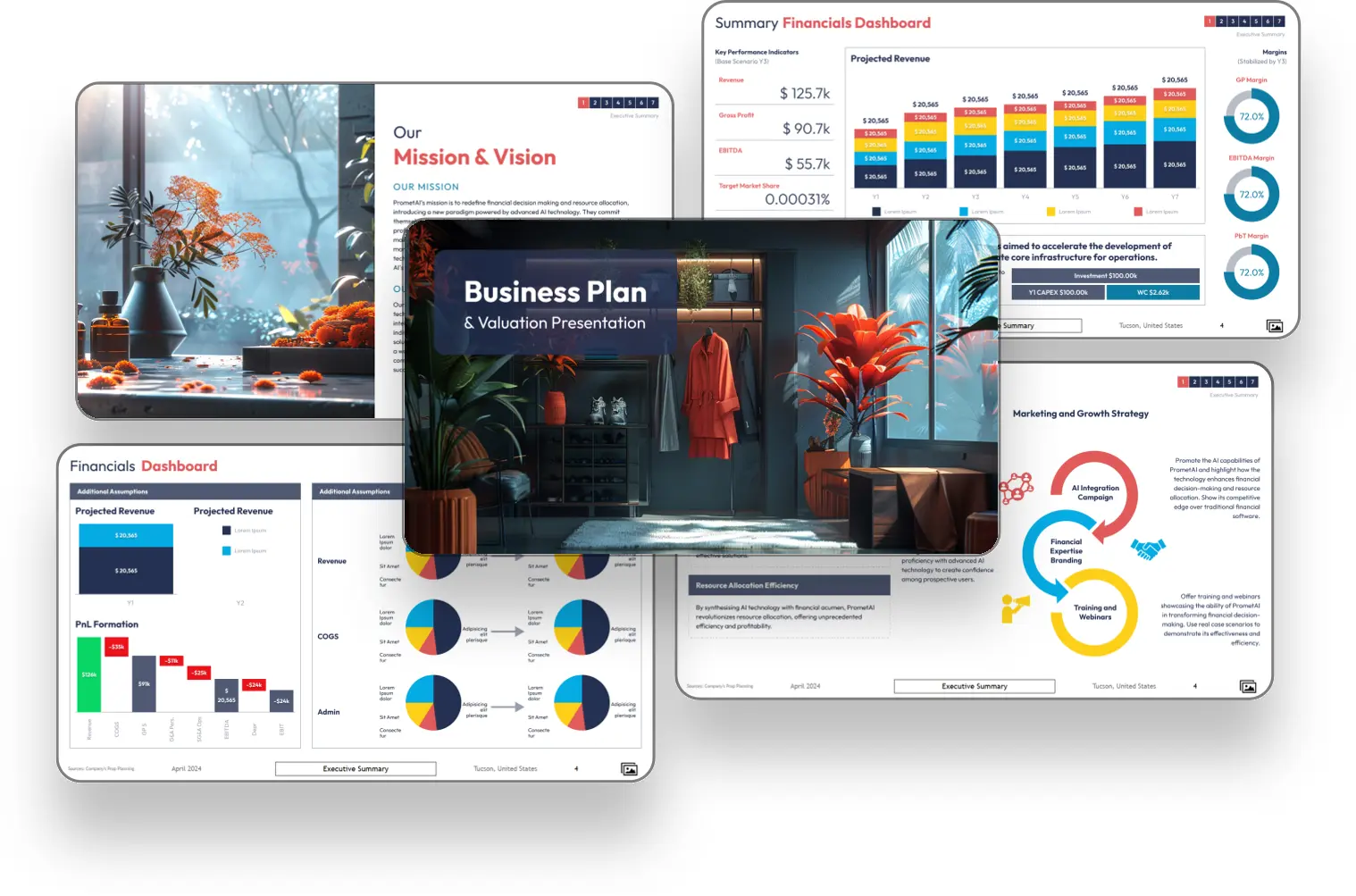
What You Get with PrometAI's Mobile App Business Plan Template

Executive summary

Executive summary

Market analysis

Market analysis

Revenue model

Revenue model

Cost Structure

Cost Structure

Financial projections

Financial projections

Funding strategy

Funding strategy

Risk analysis

Risk analysis

Production planning

Production planning

What Makes a
Strong Business Plan for an App Startup

A strong business plan template for app startup goes beyond user growth. In a mobile app startup, investors look at who uses the app first, why they choose it, and why they keep using it. They also want to see how the app makes money over time and what can slow down growth. In FluxFlow’s case, this includes Gen Z and Millennial demand, Open Banking integration, freemium conversion, affiliate monetization, and a roadmap that moves from budgeting tools to predictive wealth management.

A clear plan also shows how the app stands out in the market. It explains what makes the product different, what is hard to copy, and what gives it an advantage. This includes product intelligence, data access, compliance readiness, and user engagement design. It also shows real risks, such as users switching to other apps, similar products, and strong competition.

Scaling should match how mobile apps grow in real life. As users increase, costs also grow, including infrastructure, support, security, and marketing. At the same time, the model should show how retention and monetization improve without overstating market share.

A strong plan also builds trust. It should cover regulations, user trust, churn, and step-by-step product growth. This makes it clear that growth is planned and not easy or risk-free.

What Makes a

Financial Planning Considerations for a
Mobile App Business

Financial planning in mobile app businesses should reflect how digital growth works. It should also include real costs like product development, infrastructure, compliance, and retention. A strong business plan sample for mobile application clearly connects product strategy with revenue, costs, funding needs, and timing, so investors can easily understand the plan.

Revenue mix discipline

Revenue mix discipline

Revenue should be clearly separated. This includes subscriptions, premium upsells, affiliate income, and ancillary revenue. Keeping these streams separate, instead of blending them into one growth line, makes the model clearer and stronger.

Retention-driven monetization

Retention-driven monetization

Growth should not depend only on downloads. Users need to stay and keep using the app. The plan should show how users move from free to paid.

Platform and infrastructure costs

Platform and infrastructure costs

Costs grow as users increase. These include cloud hosting, API integration, customer support, and ongoing product maintenance. These should be treated as ongoing cost layers.

Compliance cost exposure

Compliance cost exposure

Some apps must follow strict rules. Costs for GDPR, FCA, security, and data protection can directly affect margins. These should not be treated as small or secondary costs.

Capital allocation timing

Capital allocation timing

Mobile apps often need high upfront investment. This includes product development and infrastructure. A mobile app business plan template free should clearly show CAPEX, working capital, and how long the business can run before becoming stable.

Common Mistakes in
Mobile App Business Plans

01

Download-led forecasting

Some plans focus only on app downloads. They ignore what really matters, such as users staying, using the app, and paying. Without this, revenue will not last.

02

Thin cost structure assumptions

Costs are often too low in the plan. This includes infrastructure, compliance, support, and professional services. Because of this, profits may look higher than they really are.

03

Thin cost structure assumptions

Costs are often too low in the plan. This includes infrastructure, compliance, support, and professional services. Because of this, profits may look higher than they really are.

04

Weak monetization architecture

Some plans mention subscriptions or premium features but do not explain how they make money. A good app development business plan example shows how each revenue source supports growth.

05

Unproven scaling logic

A plan loses trust when it assumes fast growth without proof. It should address competition, easy switching, and the time needed to improve product-market fit.

06

Investor-readiness gaps

Some plans miss important parts. These include clear growth steps, risk planning, and different scenarios. They also do not explain compliance, user trust, and funding needs. This makes the plan weaker.

Why Founders Use PrometAI
to Build Their App Business Plan

PrometAI helps founders build clear and structured app business plans. As an AI business plan generator, it connects strategy, numbers, and assumptions in one place. This means growth, revenue, costs, and funding all align in a way investors can easily review.

In mobile app businesses, many parts work together. These include user acquisition, churn, monetization, platform costs, and product development. PrometAI helps manage this by offering guided planning, automated financial models, valuation tools, and scenario testing. As a result, the final plan becomes easier to use and better for investor discussions.

PrometAI also improves investor readiness. As a result, risks become clear and easy to understand. Features like stress testing, clear assumptions, and simple formatting show how the business performs in different situations. This makes a mobile app business plan example pdf look more realistic and reliable, especially where compliance, trust, and retention matter most.

Why Founders Use PrometAI

Example Structure of a Mobile App Business Plan

This section shows how a mobile app plan is built step by step. A strong business plan sample for mobile application explains each part in a clear and simple way.

Sections

1. Executive Overview (Mission, Vision & Business Concept)

9. Scenario Analysis, Stress Testing & Financial Simulations

8. Risk Management & Compliance Considerations

7. Financial Overview (Revenue Model, Investment & Key Metrics)

6. Operations & Organizational Structure

2. Company Overview & Product Offering

4. Growth Strategy & Development Phases

5. Competitive Positioning & Strategic Analysis

3. Market Opportunity & Target Customers

Read More

FAQs