Cyber Security Business Plan Template

A small cyber security business business plan template is not just a document for presentation. It helps show if the business is truly ready to operate and grow. In cybersecurity, unclear or weak plans are quickly rejected because the risks are serious and cannot be ignored.

That is why a strong plan needs to go beyond listing services. It should clearly explain how those services will be delivered, how compliance will be managed, and how the business will earn and manage money. Clear thinking in these areas helps show that the business is built on a solid foundation. A well-built template helps guide this process from the beginning. It brings focus to positioning, service setup, recurring income, risk management, and how funds will be used. These are the key points investors look at when deciding if a cybersecurity business has real potential to scale.
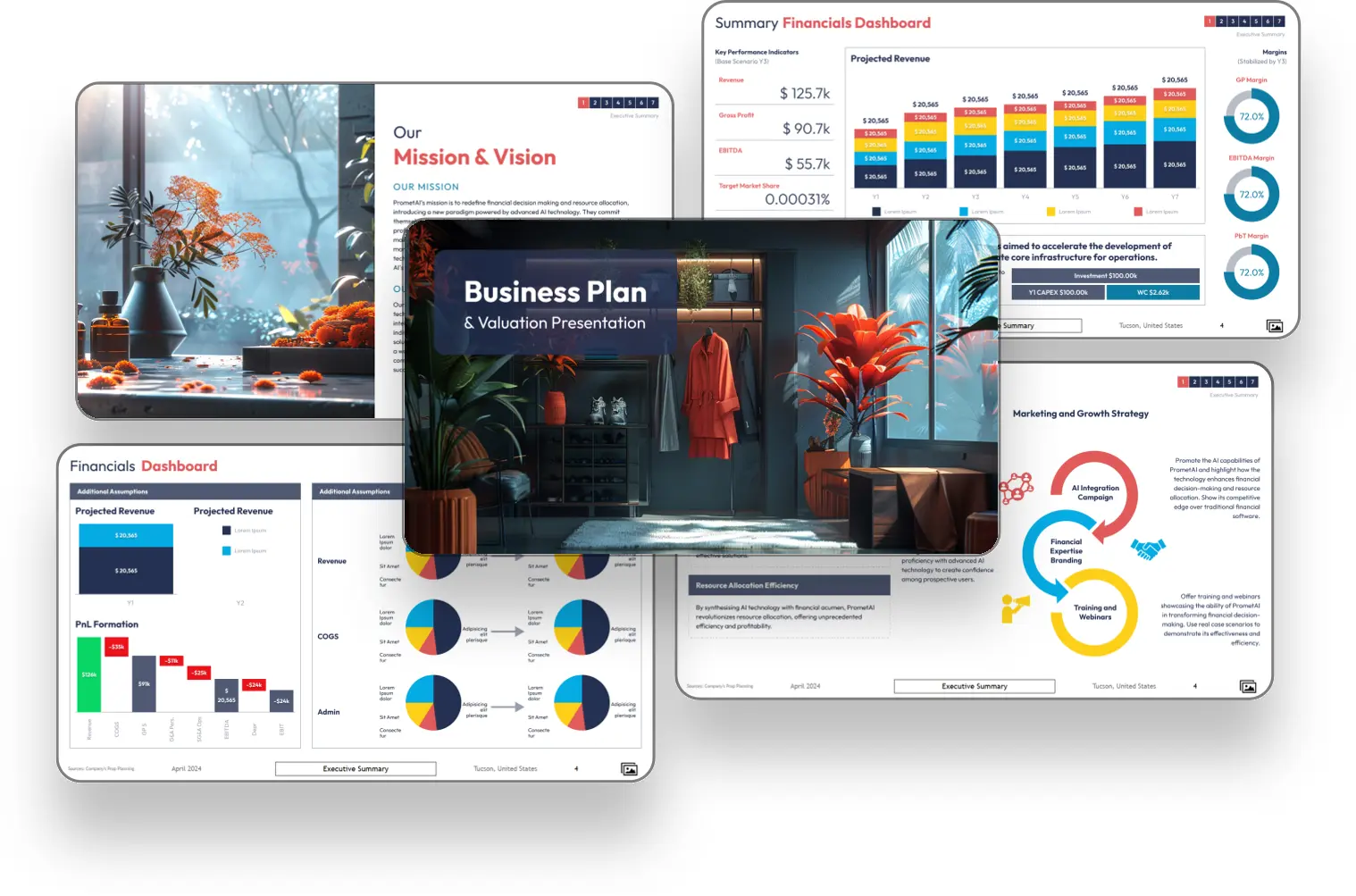
Business plan example

What You Get

Executive summary

Executive summary

Market analysis

Market analysis

Revenue model

Revenue model

Cost Structure

Cost Structure

Financial projections

Financial projections

Funding strategy

Funding strategy

Risk analysis

Risk analysis

Production planning

Production planning

What Makes a Strong
Cyber Security Business Plan

In cybersecurity, investors do not support general ideas like “we protect businesses.” They want clear plans that show how trust is built, how services are delivered, and how profits are maintained as the business grows. That is where a strong cyber security business plan template becomes important.

A clear cyber security plan template for small business should make the strengths easy to see. Investors look for a focused target customer, well-defined services, and steady monthly income. They also want to see that the business can grow without needing to hire too many new people. Compliance should also be useful for clients, not just technically correct.

At the same time, weak points are easy to notice. Some plans overestimate the market, set prices too low, ignore daily workload pressure, and treat compliance as a simple task. A stronger plan explains how monitoring, response, governance, and advisory services work together. It should also show where automation helps and where expert input is still needed to keep quality high and costs under control.

A good small business cyber security plan example also shows a clear understanding of customers. Small businesses do not respond to complex technical terms. They care about reducing downtime, being ready for audits, handling security incidents with confidence, and paying a predictable monthly cost. A strong plan should reflect this.

Finally, everything should connect smoothly. A well-prepared cyber security business proposal pdf should link security services with business continuity, reporting, and long-term support. This shows that the business is built to provide complete and lasting value.

Cyber Security Business Plan Template

Financial Considerations for
Cyber Security Business Plans

Cyber security businesses can earn recurring revenue, but costs can rise quickly. A clear plan should show where money is spent and how profits are managed.

Upfront Tooling Spend

Upfront Tooling Spend

Tools are needed from the start. This includes security systems, monitoring platforms, and workflow tools. A plan should clearly list these early costs.

Cash Flow Timing

Cash Flow Timing

Money does not always come in right away. The business may need to pay for tools and staff before receiving payments from clients. Payment delays can create pressure, even if the business is growing.

Onboarding Friction

Onboarding Friction

Setting up new clients can take time and effort. If this process is slow or complex, it can reduce profits. A strong cyber security business continuity plan example should show how simple and standard setups can save time and cost.

Compliance Cost Layer

Compliance Cost Layer

Compliance adds cost. Certifications, audits, legal checks, and documentation are required. These also affect pricing and how long it takes to close deals.

Analyst-Driven Cost Base

Analyst-Driven Cost Base

People are a major cost in cybersecurity. Work like monitoring, handling alerts, and giving advice requires skilled staff. Any cyber security business continuity plan template should include realistic staffing needs based on actual workload.

Common Mistakes in
Cyber Security Business Plans

01

Confusing Revenue with Scale

More clients do not always mean a stronger business. If each new client needs custom work and extra time, profits can quickly drop.

05

No Downside Case

Cybersecurity involves risk. A plan should include possible challenges and show how the business will handle them.

04

Soft Cash Assumptions

Cash flow is often overlooked. Delays in setup, client payments, and ongoing expenses can create pressure. Ignoring this makes the plan unrealistic.

03

Weak Retention Logic

Keeping clients is just as important as getting them. If the service does not offer clear value through reporting, support, and long-term benefits, clients can easily leave for another provider.

02

Underestimating Delivery Costs

Selling the service is only one part of the business. The real cost comes after that. Daily monitoring, handling incidents, reporting, and compliance all require time and resources, which add ongoing pressure on costs.

Why Use PrometAI for Your
Cyber Security Business Plan

PrometAI is designed to help build a cyber security plan that actually works in real conditions. It focuses on the business model itself, not just how the plan looks on paper.

It allows founders to clearly map out recurring income, costs, and funding needs. This is important in cybersecurity, where profit depends on the right balance between team size, automation, and service structure.

Another key benefit is testing different scenarios. Changes in pricing, hiring, or cash flow can be explored in advance. This helps show how stable the business is under different conditions.

PrometAI also supports better valuation. It connects financial performance with risk and long-term stability. This creates a more realistic picture of the business, which is what investors expect to see.

Why Use PrometAI for Your

Example Structure For Cyber Security Business Plan

A good cyber security business plan helps explain how the company will keep clients safe from online threats while building a stable and growing business. Each section gives a clear view of the company’s services, operations, financial plans, and future growth strategy.

Sections

1. Executive Overview

9. Scenario Analysis

8. Risk Management

7. Financial Overview

6. Operations

5. Competitive Analysis

4. Growth Strategy

3. Market Opportunity

2. Company Overview

Read More

FAQs