Winery Business Plan Template

A winery business is about much more than making and selling wine. Behind every bottle, there are important decisions about land, grape production, equipment, storage, pricing, sales, and daily business costs.

In this industry, small mistakes can become expensive very quickly. Poor planning, high production costs, slow sales, or weak money management can hurt the business long before the brand becomes successful. That is why investors look beyond the label and focus on how the winery will operate and grow over time.
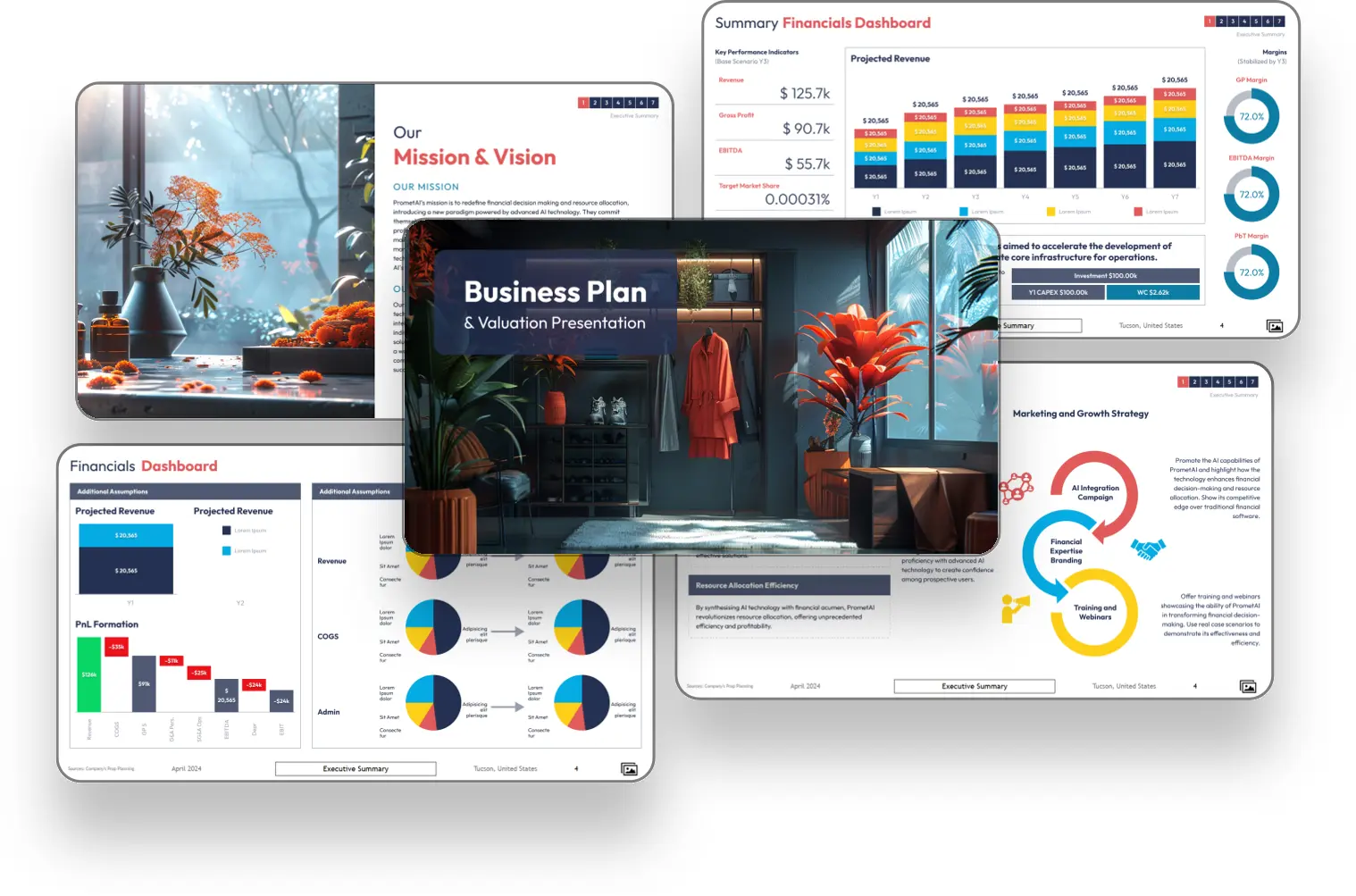
What You Get

Executive summary

Executive summary

Market analysis

Market analysis

Revenue model

Revenue model

Cost Structure

Cost Structure

Financial projections

Financial projections

Funding strategy

Funding strategy

Risk analysis

Risk analysis

Production planning

Production planning

What Makes a Strong
Winery Business Plan

A strong winery business plan should clearly explain how the winery will work and make money. Good wine alone is not enough. Investors also want to know how the business will sell its products, manage costs, and continue growing in the future.

For example, a winery can earn money in different ways. Some customers may buy wine directly from the winery, join a wine club, visit tasting rooms, attend events, or purchase wine through stores and restaurants. A good business plan explains which sales methods the winery will use and why they are important for the business.

Wine production also takes a long time, which makes planning very important. Grapes need time to grow, wine needs time to age, and packaging and shipping can also create delays. Because of this, wineries cannot increase production very quickly whenever demand grows. A strong business plan explains how the winery plans to manage production carefully while still keeping product quality high.

Weak business plans often make unrealistic promises. Some expect very fast growth without explaining how the business will achieve it. Others ignore important costs such as wine storage, shipping problems, legal requirements, packaging expenses, and the extra money needed to support growth. A strong winery business plan should clearly explain these challenges and show how the business plans to manage them successfully.

Winery Business Plan Template

Financial Considerations for
Winery Business Plans

Starting a winery costs a lot of money. The business usually spends money first and earns profits much later. A winery may need to pay for land, grape growing, wine production, storage, bottles, packaging, tasting rooms, and many other things before customers start buying regularly.

Because of this, a winery business plan should clearly explain how the business will manage money while waiting for sales to grow.

CapEx Load

CapEx Load

A winery needs many expensive things before opening. This can include land, wine-making equipment, storage space, furniture, packaging, and online ordering systems. A good business plan should clearly show where the startup money will be spent.

Working Capital Buffer

Working Capital Buffer

Every winery needs extra money saved for unexpected problems. Bad weather, slow sales, supplier issues, or shipping delays can all create challenges for the business. A strong winery business plan should include backup funds to help the business continue running smoothly during difficult periods.

Compliance and Shipping Costs

Compliance and Shipping Costs

Wine businesses must follow many legal rules. They may need to pay for labels, shipping rules, age checks, permits, and transportation. These costs continue over time, so they should be included clearly in the business plan.

Inventory and Cash Conversion

Inventory and Cash Conversion

Wine takes time to produce and sell. Grapes need time to grow, wine needs time to age, and bottles may stay in storage before customers buy them. This means the business may spend money for a long time before receiving enough income. A strong plan should explain how the winery will handle this.

Unit Economics by Channel

Unit Economics by Channel

A winery can make money in different ways. Some people buy wine directly from the winery. Others visit tasting rooms, join wine clubs, attend events, or buy wine from stores and restaurants. Each of these brings different costs and profits, so the business plan should explain how each one helps the winery earn money.

Common Mistakes in
Winery Business Plans

01

Scaling Demand Faster Than Supply

Some winery owners expect to sell much more wine very quickly. But wine cannot be produced overnight. Grapes take time to grow, wine takes time to age, and wineries can only make a certain amount at a time. If demand grows too fast, the business may struggle to keep up.

05

Using Generic Market Logic

Some business plans only say that the wine market is growing without explaining why customers would choose this winery. Investors want to know what makes the wine special, why people will buy it, and what will keep customers returning in the future.

04

Ignoring Cash Flow Timing

Wineries often spend money long before they receive enough sales income. The business may need to pay for equipment, grape production, storage, and packaging while waiting for wine to be sold. Without careful planning, the winery can run into money problems even if sales look strong.

03

Treating Wine Club Revenue as Guaranteed

Wine clubs can help wineries earn regular income, but customers do not always stay forever. Some may cancel memberships or lose interest over time. A good business plan should explain how the winery plans to keep customers happy and encourage them to continue buying.

02

Overstating Margin Expansion

Many people think expensive wine always brings high profits. In reality, wineries also spend money on bottles, packaging, shipping, customer service, and legal requirements. If these costs are ignored, profits may become much lower than expected.

Why Use PrometAI for Your
Winery Business Plan

PrometAI helps winery owners turn a business idea into a more realistic and organized business plan.

In a winery business, many things can affect profits and growth. Costs for vineyards, wine production, packaging, storage, and daily operations can change over time. Customer sales, wine club memberships, tasting-room income, and inventory levels can also affect how much money the business earns and how quickly cash comes in.

Because of this, a winery business plan should not rely on only one prediction. PrometAI helps business owners test different situations to see how the winery may perform if sales grow more slowly, costs increase, memberships decline, inventory builds up, or expansion plans are delayed. 

This helps create a stronger and more believable investment plan. Instead of showing only the possible success of the business, the winery can also explain how it plans to manage difficult situations, protect cash flow, maintain pricing, and preserve the brand’s value over time.

Why Use PrometAI for Your

Example Structure For Winery Business Plan

A winery business plan should clearly explain how the winery will operate, earn money, and grow successfully over time.

Sections

1. Executive Overview

9. Scenario Analysis

8. Risk Management

7. Financial Overview

6. Operations

5. Competitive Analysis

4. Growth Strategy

3. Market Opportunity

2. Company Overview

Read More

FAQs