Pizza Shop Business Plan Template

Opening a pizza shop is not only about making delicious pizza. To build a successful business, the restaurant also needs to manage daily expenses, employees, ingredients, customer orders, and delivery services in the right way.

Many pizza shops become busy very quickly, but that does not always mean the business is making good profits. Problems like high food costs, slow service, wasted ingredients, or poor planning can create financial difficulties over time.
What You Get

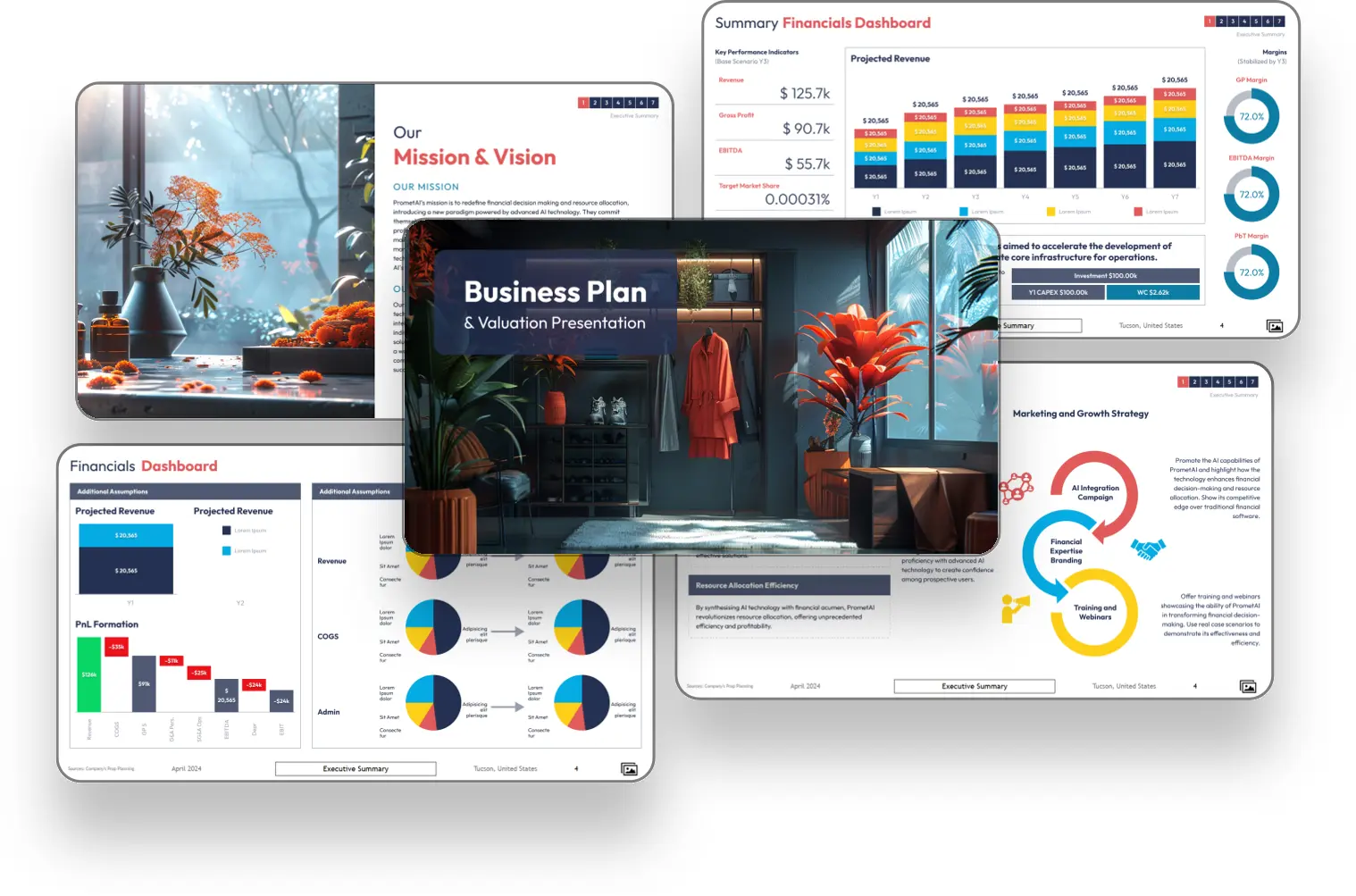
Executive summary

Executive summary

Market analysis

Market analysis

Revenue model

Revenue model

Cost Structure

Cost Structure

Financial projections

Financial projections

Funding strategy

Funding strategy

Risk analysis

Risk analysis

Production planning

Production planning

What Makes a Strong
Pizza Shop Business Plan

A strong pizza shop business plan should clearly explain why customers would choose this restaurant instead of many other pizza shops. Investors want to understand what makes the business different and how it plans to make steady profits while handling dine-in orders, takeout, and deliveries at the same time.

The best business plans also show a clear connection between the restaurant idea and how the business will earn money. In this example, the pizza shop focuses on high-quality ingredients, carefully prepared dough, wood-fired cooking, and premium pizza for customers at home and in the restaurant. The business earns money from dine-in orders, delivery services, takeout, pizza kits, and other sales. This helps create multiple income sources instead of depending on only one.

Weak business plans often make common mistakes. Some overestimate customer demand or assume the restaurant will become popular very quickly. Others focus too much on delivery without considering extra costs like packaging, employee pressure, delivery fees, or lower food quality during transport. Some pizza shops also charge high prices without clearly explaining why customers would pay more in a highly competitive market.

A stronger business plan also explains possible risks and challenges. Problems with suppliers, food safety, employee turnover, broken equipment, online ordering systems, and maintaining food quality during busy periods can all affect the business. A good plan should show how the restaurant will manage these problems while continuing to grow successfully.

Pizza Shop Business Plan Template

Financial Considerations for
Pizza Shop Business Plans

Managing the money side of a pizza shop can be harder than many people expect. Even small problems like wasted ingredients, slow service, delivery costs, or poor staff planning can affect profits very quickly. Because of this, a good business plan should clearly explain how the restaurant will control costs and manage daily operations successfully.

This business plan follows a careful and realistic approach. The restaurant focuses on steady growth, controlled spending, and building a strong business from the beginning instead of growing too quickly.

CapEx Intensity

CapEx Intensity

Starting a pizza shop usually costs a lot of money in the beginning. The business needs ovens, kitchen equipment, tables, furniture, ordering systems, and other important tools before opening. In this business plan, most of the money is spent during the first year to prepare the restaurant for daily operations.

Compliance and Operating Risk Costs

Compliance and Operating Risk Costs

Running a pizza shop also means following many important rules. The business needs to meet food safety requirements, employee laws, permit rules, labeling regulations, and customer data protection rules. These responsibilities can create extra costs over time, so a strong business plan should explain how the restaurant plans to manage them properly.

Working Capital Pressure

Working Capital Pressure

A pizza shop may start making sales but still face money problems early on. The business often needs cash for salaries, ingredients, taxes, supplies, and other daily expenses before profits become stable. Because of this, the business plan includes extra funding to support the restaurant during the early stages.

Food and Labor Economics

Food and Labor Economics

Ingredients and employee salaries are two of the biggest expenses in a pizza shop. The business plan explains how money will be spent on food, staff, packaging, and supplies. This helps show how the restaurant plans to control costs while continuing to make profits.

Revenue Mix Discipline

Revenue Mix Discipline

A pizza shop can earn money from different sources. Customers may eat inside the restaurant, order takeout, use delivery services, or buy pizza kits to prepare at home. A strong business plan separates these income sources clearly so it is easier to understand where the business earns most of its money.

Common Mistakes in
Pizza Shop Business Plans

01

Scaling Before Repeatability

Opening several pizza shops may sound exciting, but growing too quickly can create serious problems. If the first location still struggles with service, food quality, or staff management, expansion usually makes those problems even bigger. A pizza shop should first learn how to run one location successfully before opening another.

05

Treating Brand Positioning as Enough

A good-looking restaurant idea alone is not enough for long-term success. Investors want to understand why customers will continue returning, why they will pay the restaurant’s prices, and how the business will maintain food quality for dine-in, takeout, and delivery orders.

04

Underestimating Margin Erosion

High-quality ingredients, skilled employees, and premium packaging can improve the customer experience, but they also increase costs. If these expenses are not planned carefully, profits can become much lower than expected and the business may struggle to cover its costs.

03

Weak Cash Flow Assumptions

Money management is very important in a pizza business. The restaurant needs cash every day to pay for ingredients, salaries, rent, taxes, and equipment. Some businesses look successful but still face financial problems because they run out of cash too early.

02

Confusing Revenue Growth with Healthy Growth

Higher sales do not always mean the business is becoming more successful. A pizza shop may receive more orders but still lose profits because of discounts, delivery fees, expensive packaging, food waste, or poor staff scheduling. A strong business should focus on both sales and profit at the same time.

Why Use PrometAI for Your
Pizza Shop Business Plan

Running a pizza shop involves many changing costs and daily business decisions. Ingredient prices can increase, delivery orders can grow, employee costs can become higher, and equipment expenses may cost more than expected. Even small changes like these can affect profits very quickly.

Because of this, a pizza shop business plan should do more than show simple numbers. The business also needs to test different situations to understand how changes in sales, food costs, delivery services, packaging, staffing, and daily operations may affect the restaurant.

PrometAI helps business owners connect all of these parts in one place. It helps them understand how daily operations affect cash flow, funding needs, profits, and future business value. This makes the business plan more realistic, easier to understand, and more trustworthy for investors.

Why Use PrometAI for Your

Example Structure For Pizza Shop Business Plan

A pizza shop business plan should help readers quickly understand how the restaurant will run, attract customers, and grow successfully in the future.

Sections

1. Executive Overview

9. Scenario Analysis

8. Risk Management

7. Financial Overview

6. Operations

5. Competitive Analysis

4. Growth Strategy

3. Market Opportunity

2. Company Overview

Read More

FAQs