Align, Straumann, Heartland and Overjet grew through the dentist. SmileDirectClub liquidated and Byte cost Dentsply $1.04 billion.
Dental Case Study Examples
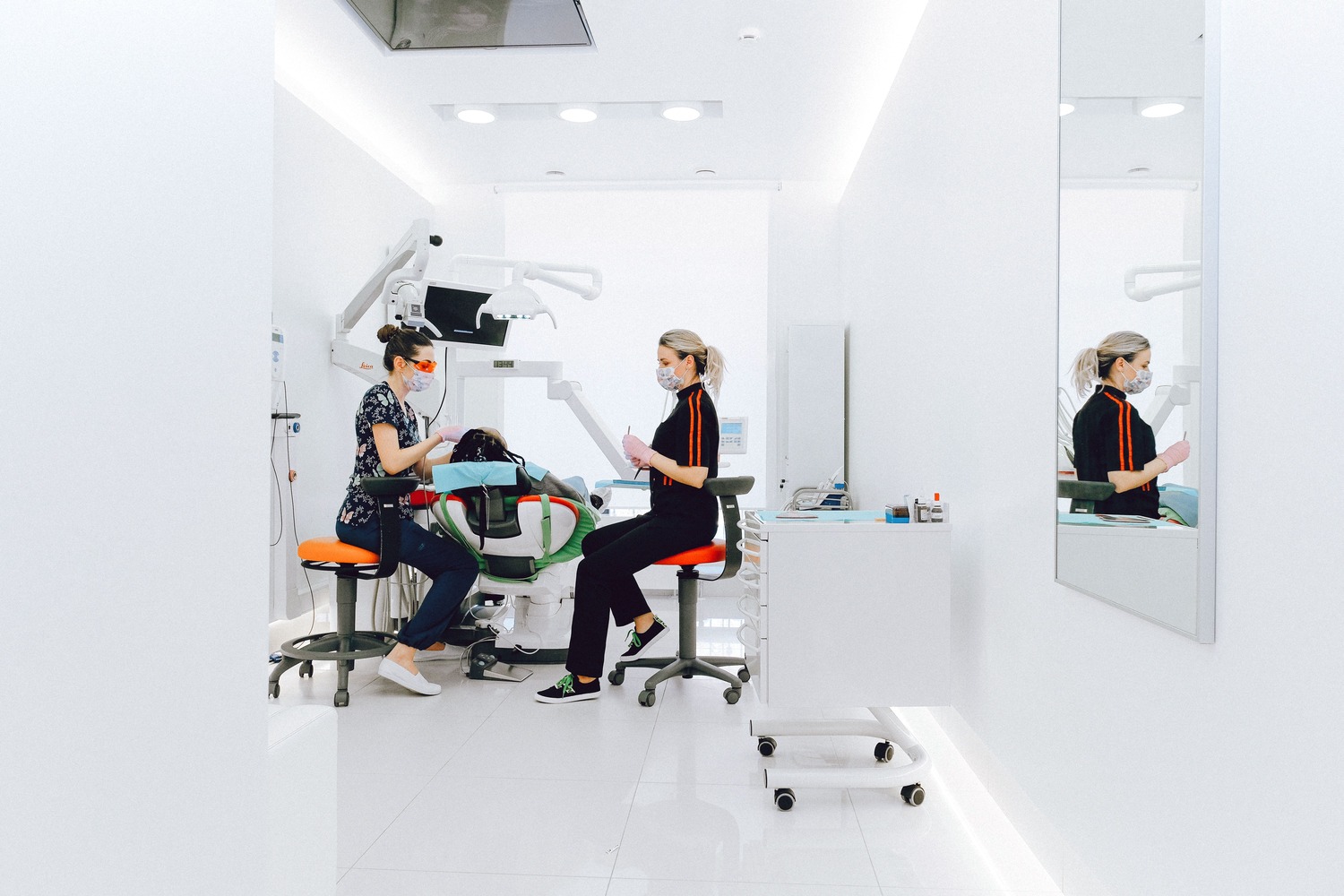
Case 1
This dental case study collection opens with the cleanest natural experiment modern healthcare has ever produced. Six real dental businesses sit at the center of it, four that built lasting success by working closely with dentists, and two that spent billions trying to route around them entirely.
Here's what makes clear aligners such a perfect way to study a dental business. The plastic was the same. The treatment was the same. Even the decade on the calendar was the same. Yet two companies sold that exact same idea in two completely different ways, and the outcomes couldn't have looked more different.
One approach built a $4 billion company. The other ended in liquidation, along with a write-down of roughly half a billion dollars. The six stories ahead separate what the product itself actually did, from what the sales channel around it did instead.
Case Study 1: Align Technology, the Dental Technology Company That Reached $4 Billion Without Cutting Out the Dentist
Align spent twenty years trying to convince orthodontists, the dentists who fix crooked teeth, that a clear plastic tray could work just as well as metal brackets and wires.
Once regular people knew the brand well, Align had a choice. Sell straight to those people, skip the dentist, and keep all the profit for itself. Align said no.
For about four years, that choice looked too cautious. Then it turned out to be the whole reason the company succeeded.
About the Business
Type: Medical device manufacturer, clear aligners and digital orthodontic hardware
Founded/Launched: 1997, Tempe, Arizona
Revolution: Align made the treatment plan digital, meaning it lives on a computer instead of paper. And it made the dentist the main way the product reached patients. That meant growth came from a network of doctors, not from advertising straight to regular people.
Fixing crooked teeth used to depend entirely on a dentist's hands-on skill, using metal brackets and wires. Clear aligners asked for something much harder.
Orthodontists had to trust a manufacturing process they couldn't actually see, for a patient they had already agreed to treat. Here's the tricky part. If something went wrong, it hurt the dentist's own reputation, not Align's.
So trust had to be earned one doctor at a time. The real challenge was never finding patients who wanted this. It was earning enough trust from doctors first.
Instead of trying to sell around dentists, Align trained them. The whole business was built on certifying doctors to use its dental technology the right way. By 2025, more than 295,000 dentists worldwide have become trained, certified Invisalign providers.
Align also made sure to own more than just the plastic trays. It built its own scanning machines, called iTero scanners, and placed them directly inside dentist offices. More than 121,000 of these machines are actively used today. That meant each dentist's daily scanning routine became part of Align's own system.
Manufacturing scale mattered too, something almost nobody else could match. Align has now made more than 2.4 billion clear aligners. Making that many turns each new patient's case into something simple and cheap to produce, instead of a brand new challenge every single time.
The Results
In fiscal year 2025, Align reported record total earnings of $4.0 billion. Of that, $3.2 billion came from selling clear aligners, and $789.6 million came from equipment and services. In the final three months of 2025, the company kept 65.3% of its sales as profit under standard accounting rules, or 72.0% under an adjusted measure.
The size of Align's reach is hard to picture. More than 22 million patients have used Invisalign so far, including over 6.5 million teens and growing kids. In just the fourth quarter of 2025 alone, dentists ordered 676,900 aligner cases.
Here's the big lesson from Align's story. The exact channel a company refuses to skip can become its biggest advantage, one no competitor can simply buy their way into.
Align itself says trusting 295,000 dentists shows its real commitment to doctor-led care. Two competitors tried the opposite plan, spending roughly $2 billion combined trying to skip dentists entirely. In the end, they only proved Align right.
Case 2
Case Study 2: Straumann Group, the CHF 2.6 Billion Two-Price Play Other Dental Implant Manufacturers Avoided
For years, expensive implant makers watched cheaper companies take over the low-cost end of the market. Most of them chose not to follow.
The reason made sense on paper. A cheap version of the same product could hurt the expensive one's reputation.
Straumann did something different. It bought a cheaper competitor. It kept that brand separate. And it let both brands target different customers, all made using the same factories.
About the Business
Type: A company that makes dental implants, materials, and orthodontic products.
Founded/Launched: Started in 1954, in Basel, Switzerland.
Revolution: Straumann made pricing itself part of its main strategy. It protected its expensive, premium implant brand, while also owning the cheaper brand that could have hurt it.
The dental implant market splits sharply, based on how much money patients are willing to spend. Most dental implant manufacturers that only sell expensive products run into a real problem. They win the harder, specialist cases, but lose entire markets of everyday customers completely.
That's because lowering its own prices would hurt the brand's reputation. This trap is well known in the industry, and very few companies ever escape it.
Lowering prices to keep customers teaches people the expensive price was never really worth it. But keeping prices high hands the fastest-growing markets over to whichever competitor gets there first, and learns that market before you do.
Straumann ran two separate brands, on purpose. Its expensive Straumann brand and its cheaper challenger brand, called Neodent, targeted completely different types of customers. Neodent kept growing across both older, established markets and newer, growing ones, winning customers specifically in the cheaper segment.
The company also spent real money growing the cheaper brand's production, not just its premium line. It built a third Neodent factory in Curitiba, treating the cheaper brand as a real, long-term investment, not just a backup plan.
At the top of the market, Straumann competed by building better products, not by lowering prices. Demand for its premium products came from newer, more advanced implant systems. This kept its expensive brand focused on quality, not on discounts.
The Results
In fiscal year 2025, Straumann reported CHF 2.6 billion in revenue, growing 8.9% in real terms, or 4.1% in Swiss francs once currency changes were factored in.
Core profit margin reached 26.5% using steady 2024 exchange rates, or 25.2% as actually reported, even while dealing with real pressure from currency changes and trade tariffs.
Here's the big lesson from Straumann's strategy. A cheaper brand you own yourself becomes protection. A cheaper competitor you simply ignore becomes a way for customers to leave you.
Straumann treated the cheap end of the market as territory worth owning, not something to avoid. That's exactly why its premium brand never had to lower its prices to keep customers.
This lesson goes far beyond dentistry too. A cheaper version of your product will always exist, whether you like it or not. The only thing you actually control is whose company that cheaper version belongs to.
Case 3
Case Study 3: Heartland Dental, the Dental Practice Management Company That Turned 1,800 Offices Into a Financeable Asset
Running your own dentist's office sounds simple, but it's not. A solo dental practice can be a great business day to day, and still be a terrible thing to actually sell later.
It depends completely on one person, the dentist. It has no bargaining power with suppliers. And almost nobody wants to buy it, except maybe another dentist.
Heartland's big idea was surprisingly simple. The actual dentistry never needed to change at all. Everything happening around it did.
About the Business
Type: A dental support organization. It offers non-medical help to dental practices it partners with.
Founded/Launched: Started in 1997, in Effingham, Illinois.
Revolution: Heartland split a dental practice into two parts. The clinical work, done by the dentist, and the business side, everything else. It turned that second part into something that could grow big, and something investors would actually want to fund.
A dentist who owns their own office is secretly running two businesses at once. One is treating patients. The other is running a small company, handling paychecks, buying supplies, dealing with insurance paperwork, marketing, and following rules and regulations.
That second job has nothing to do with what dentists actually train for in school. It brings no real joy. And it's exactly where most of an owner's time quietly disappears.
It also creates a big problem later. A practice that only works because of one specific dentist's personal relationships is nearly impossible to sell, unless the buyer is willing to step directly into that same dentist's shoes.
Heartland took over the messy business side. It lets dentists keep full control over patient care. The company handled non-medical support for the practices it worked with, the core of Heartland's whole dental practice management approach. That meant a dentist gave up paperwork and admin headaches, not control over how they treated patients.
Growth happened two ways at once. By June 2025, the company had opened 38 brand new offices in fast-growing areas. It also completed 13 partnerships with existing practices. It grew by building new locations, and by buying into existing ones, all at the same time, instead of picking just one method.
Big investors helped speed things up too. In March 2018, a company called KKR bought a majority share of Heartland, from its previous owner, a pension fund. This basically swapped one long-term investor for another, instead of quickly flipping the business for a fast profit.
The Results
At the end of 2017, right before that KKR deal, Heartland's network included about 840 supported dental practices, across 35 states. It employed 11,000 people. Together, those practices earned an estimated $1.3 billion a year.
By August 2025, Heartland supported more than 3,000 dentists, across more than 1,800 dental offices, spread across 39 states and Washington, D.C. KKR still owns the majority of the company today. The number of offices roughly doubled in just seven years.
Here's the big lesson from Heartland's story. The real valuable part of a dental office was never the dentist's chair. It was everything built around it.
Heartland proved that even an industry known for resisting big companies could still grow this way, as long as the growth stopped exactly where a dentist's medical judgment begins. That boundary is the whole secret behind the company's design.
Cross that line, and you're basically practicing medicine without a license. Stay just short of it, and the dentist keeps doing the work they trained for, while the company handles everything else that can actually grow bigger and bigger.
Case 4
Case Study 4: Overjet, the $550 Million Dental Software That Sells the Same Evidence to Both Sides of the Argument
Imagine two people arguing about a photo, but the photo is too blurry to prove either side right. That's basically what happens with dental insurance claims.
The dentist says a patient's tooth needs treatment. The insurance company isn't so sure. And an old, grainy x-ray usually can't settle the argument for either side.
Overjet came up with a clever fix. Sell the exact same measuring tool to both sides at once. That way, the argument ends with a real number, instead of endless back and forth.
About the Business
Type: Dental software that uses artificial intelligence to read dental x-rays. It's sold to dentist offices, dental companies, and insurance companies.
Founded/Launched: Started in 2018, by researchers from MIT and Harvard. Led by a CEO named Wardah Inam.
Revolution: Overjet turned reading an x-ray from just someone's opinion, into something measurable and official. Now both the dentist giving treatment and the insurance company paying for it can trust the same result.
Dentists sometimes disagree with each other about what an x-ray actually shows. And the whole insurance payment system is built around one assumption, that someone might be exaggerating the problem.
That creates a lot of friction. Claims get denied. People have to appeal. Patients start losing trust in the whole process. Neither dentists nor insurance companies can fix that problem completely on their own.
Most software tries to fix this by helping one side argue better than the other. But that usually just makes the fight worse, without actually solving anything.
Overjet did something smart first. It got approved by regulators before trying to sell anything. Its dental software is the only technology approved by the FDA to detect, outline, and measure signs of oral disease. That approval is exactly what lets its results count as real proof, not just someone's opinion.
The company also sold its product just as hard to insurance companies as it did to dentists. Overjet works with insurance companies that together cover more than 120 million people, including most of the ten biggest dental insurance companies in the United States.
Overjet even brought dentists in as investors, not just customers. Its $53.2 million funding round was led by a company called March Capital, with help from General Catalyst, Insight Partners, and even the American Dental Association itself.
The Results
In March 2024, Overjet raised $53.2 million in that funding round. This brought its total funding raised to about $133 million, and pushed the company's overall value up to $550 million.
The company now works with thousands of dentists, both in small private practices and large dental companies across North America. On the insurance side, its technology reaches plans covering more than 120 million people.
Here's the big lesson from Overjet's story. Sell the referee, not the argument itself. Most healthcare technology gets sold to just one side, to help that side win arguments. Overjet sold its tool to both sides at the same time instead, which turned the whole thing into a shared agreement, instead of a fight between two competing sides.
Case 5
Case Study 5 (FAILED): SmileDirectClub, the $8.9 Billion Dental Business That Bet the Dentist Was the Problem
SmileDirectClub got a few things right about the orthodontic market. Treatment cost a lot of money. Office visits felt inconvenient. And plenty of mild cases probably didn't need a full specialist involved.
From there, this dental business made one big leap. It decided the dentist wasn't really necessary at all, just extra overhead. Fifty state dental boards disagreed. Eventually, so did a bankruptcy court in Houston.
The Business
SmileDirectClub sold clear aligners directly to customers, through an online telehealth platform. Customers used at-home impression kits, and got remote monitoring, completely skipping any in-person dental visit.
At its peak, the company was valued at about $8.9 billion, back when it first went public in 2019.
The "Bitter Pill" Details
The company's whole model depended on something risky. States had to agree to allow remote supervision of a treatment that actually moves bone inside a patient's mouth. That assumption faced constant challenges. And the real cost of fighting those challenges never showed up in the company's own numbers.
The regulatory bet was the product, not a formality. A regular consumer brand can survive one bad quarter. It can't survive an entire state deciding its whole method of treatment needs a step the company was specifically built to avoid.
Growth was rented, not truly owned. Demand came mostly from paid ads, not professional referrals, meaning every single treated patient had to be bought all over again, from scratch. People don't get orthodontic treatment often, so this dental business needed constant ad spending just to support a one-time purchase, in an industry where a customer's next visit usually belongs to someone else entirely.
The financing quietly priced in the outcome early. By the time of its bankruptcy filing, the company's emergency loan reached $80 million, at 17.5% interest, paid monthly in kind, and set to mature in just three months. Lenders don't normally charge that much interest on a business they expect to survive.
That same filing also laid out a backup plan. Try to sell the business first, but if nobody showed real interest between September 29 and November 28, 2023, switch immediately to an orderly shutdown instead, with $2,500,000 set aside specifically to fund that process. In other words, the shutdown plan was already written, on the very same day the company filed for bankruptcy.
The Financial Result
SmileDirectClub filed for Chapter 11 bankruptcy on September 29, 2023, in the U.S. Bankruptcy Court for the Southern District of Texas, Houston Division. At the time, the company carried nearly $900 million in debt, following a 2022 loss of $86.4 million.
On December 8, 2023, roughly ten weeks after filing, the company announced it would wind down global operations effective immediately. Unshipped orders were canceled, the "Lifetime Smile Guarantee" ceased to exist, and customers still mid-treatment were told refund information would follow, once the bankruptcy process determined next steps.
Here's the big lesson from SmileDirectClub's collapse. When your whole business model is really a regulatory bet, the regulator itself becomes your biggest, unprotected risk.
SmileDirectClub raised and spent money as though its only real competitors were orthodontists. Its actual counterparty turned out to be fifty separate state dental boards, and no marketing budget can clear that kind of opponent.
Case 6
Case Study 6 (FAILED): Byte, the $1.04 Billion Dental Acquisition Retired in Four Years
A company called Dentsply Sirona bought another company called Byte in January 2021. This happened just four months after a similar company's stock had started crashing hard.
This dental acquisition cost $1.04 billion, paid entirely in cash, all at once. The plan made sense on paper. A real, established manufacturer, with actual clinical trust behind it, could run the same kind of business more carefully than a smaller, riskier company could.
But there was a problem. The exact same government rules were pushing against both companies equally. And those rules didn't care who owned the business.
The Business
Byte sold clear aligners directly to customers, sent through the mail, guided remotely by dentists. Customers used at-home kits to make impressions of their own teeth. Dentsply Sirona bought the company, and ran it alongside another brand it already owned for dentists, called SureSmile.
The company paid $1.04 billion in cash for Byte, in a deal announced on January 4, 2021. At the time, Dentsply Sirona said the deal would immediately help both its revenue growth and its profits per share.
The "Bitter Pill" Details
The real problem turned out to be built into the business itself, not something a better plan could fix. Dentsply Sirona later revealed that state government rules had seriously hurt how Byte operated. Fewer customers finished their treatment. New paperwork got added too, like needing to prove you'd actually visited a dentist, or providing your own dental x-rays.
Requiring a dentist visit basically removed the entire reason Byte existed in the first place. The whole idea was skipping the dentist's office.
Then, two separate problems hit at the exact same time. On October 24, 2024, the company chose to pause all sales and marketing of Byte's aligners and impression kits, working directly with the FDA on safety concerns. It also paused shipping and processing any new or recent orders. Importantly, this safety pause was described as something separate from the state rules already hurting the business.
The financial damage spread even further than just the Byte brand alone. The company expected to write off $450 to $550 million in losses, spread across two different parts of the business. Much of that decline came from tough state rules connected specifically to Byte.
The Financial Result
Compared to about $951 million in sales during the third quarter of 2024, the company told investors to expect a write-off of $450 to $550 million, and warned that even more losses might still be coming.
On January 14, 2025, Dentsply Sirona confirmed something important. It would not bring back the at-home Byte Aligner Systems or Impression Kits at all. Instead, the company shifted its focus toward treatments that involved more in-person dentist supervision, while still helping patients who were already partway through treatment and eligible to finish.
The at-home business model that cost $1.04 billion to buy was completely shut down within just four years.
Here's the big lesson from Byte's story. Careful research that only checks a company's price, without checking whether its whole business model is even allowed to legally exist, isn't real research at all. Byte's product actually worked just fine.
What Dentsply Sirona really bought was a way of doing business whose legal status was already shrinking, state by state, in plain public view, on a timeline nobody could control. That exact warning sign was already visible, trading publicly on the stock market, under a completely different company's name. The purchase happened anyway, for $1.04 billion in cash.