Begin with one truck and one week. Write down the lanes it runs, the loaded miles, the empty miles back to the next pickup, and the rate each shipper or broker pays per loaded mile. Hours-of-service rules, maintenance days and the driver's time at home all cap how far a tractor can go, so state those limits. Multiply the weekly figure by the trucks and by the weeks each is in service, and the top line is built from the equipment rather than from a share of a national market. Lenders ask for this calculation at the first meeting.
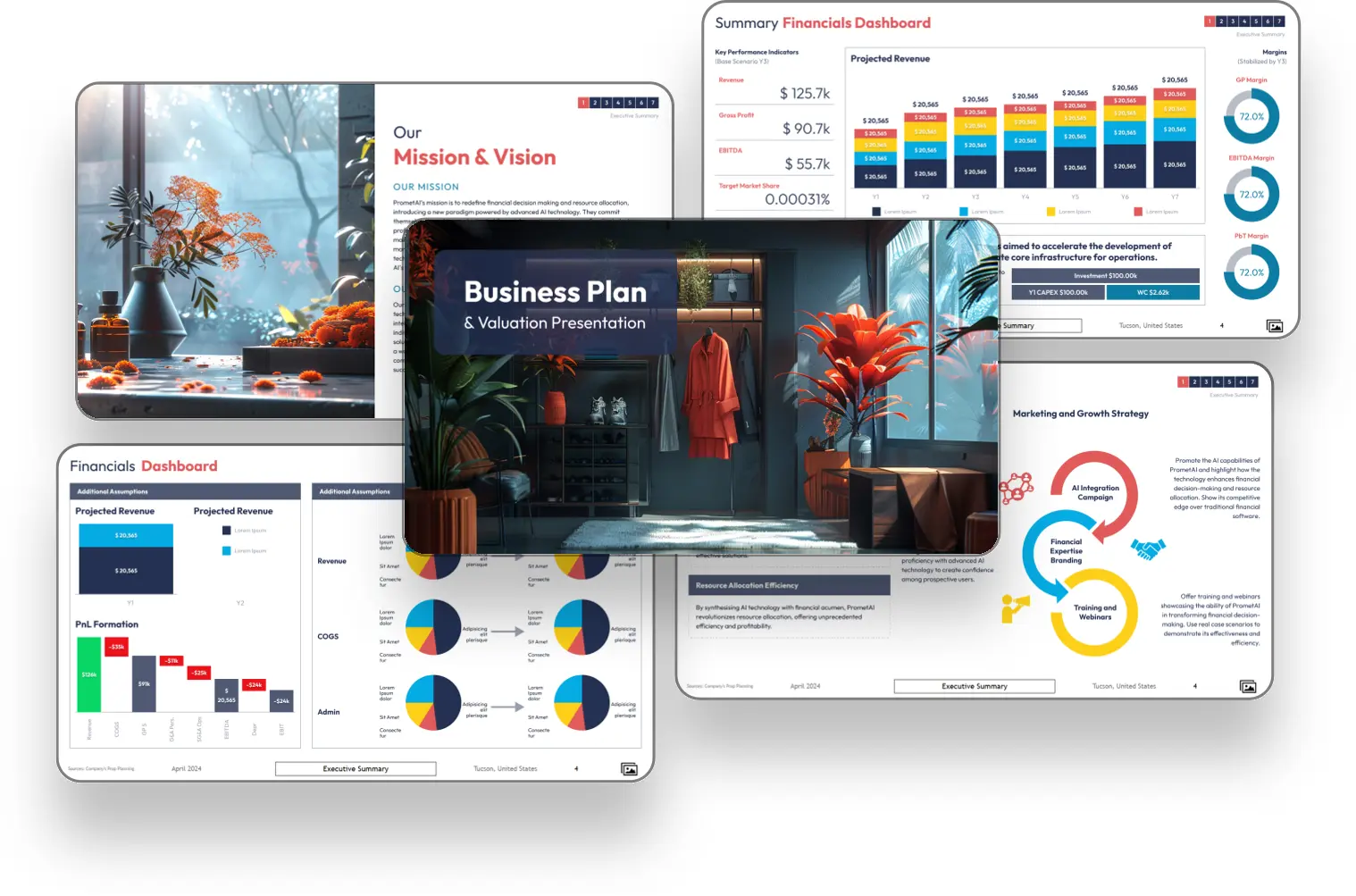
Then explain each source of income. Ironbridge's model splits revenue into contracted lanes at 45 percent, spot loads at 25, fuel surcharges at 20 and other income at 10, worth $453k, $252k, $201k and $101k by the third year. Contracted lanes bring steady volume at a negotiated rate and commit the carrier to service standards. Spot freight pays the going rate that week. The other-income line is where detention and extra-stop charges belong, and those are collected only if drivers record arrival times and dispatch bills for them. Show the intended contract and spot split, and revenue per mile when spot rates fall.
Third, describe the people who make the miles possible. Ten trucks need at least ten qualified drivers plus cover for holidays, sickness and turnover, and the Ironbridge deck names driver capacity as a bottleneck. Say how drivers are recruited, whether they are employees or owner-operators, and how they are paid (per mile, per load or by the hour). On the customer side, name the shippers behind the contracted lanes and the brokers who supply spot loads, and explain how reliance on brokers will shrink over time. Winning freight direct from shippers is a partnership strategy as much as a sales effort, and a competitor review of the regional fleets on the same lanes shows what rate those shippers will accept.
Fourth, treat safety and compliance as part of the financial case. Operating authority, insurance filings, driver testing, electronic logs and inspections are conditions of trading, and a weak safety record raises premiums. Give each obligation an owner in the risk register, as the deck does for hours-of-service compliance. Size the market the way the fleet is sized: the lanes the trucks can serve and the shippers who move freight on them. A national total is background; a bottom-up estimate of lane volume is what persuades a lender that the trucks will be full.