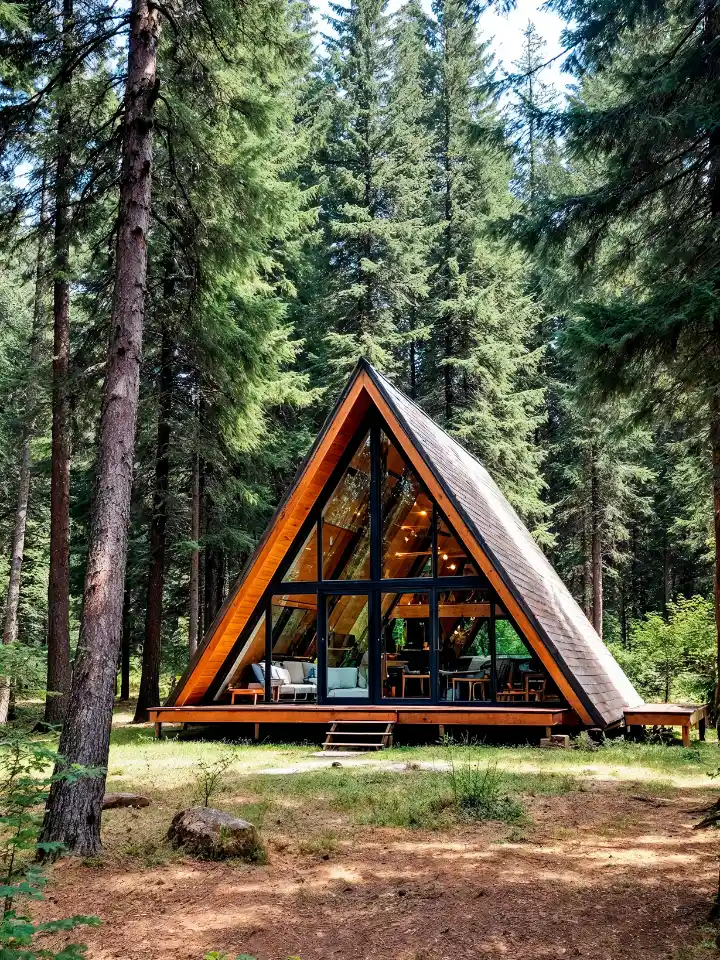
Glamping Business Plan Template

This glamping business plan template is designed for entrepreneurs who want to start a luxury outdoor accommodation business. It can be used whether you are opening one glamping site or planning to grow into several locations with safari tents and geodesic domes. When investors review a glamping business, they first look at how well the site is expected to perform. They want to see the expected revenue for each unit, how occupancy will grow over time, how much extra income guests will generate during their stay, and whether the money spent on the site can be recovered, especially if the land is leased.

A strong business plan brings all of this information together in one clear document. It should explain the site and lease strategy, how occupancy is expected to increase, how the business will earn additional income, and how it will reach stable profits. In the example used in this template, Cedar & Ember, the business is based on an average daily rate of $320 to $420, occupancy increasing from about 45% to 65% by Year 3, and an asset light approach that finances modular accommodation instead of building a permanent lodge.

Business Plan Template Example

What You Get with PrometAI’s Glamping Business Plan Template

Executive summary

Executive summary

Market analysis

Market analysis

Revenue model

Revenue model

Cost Structure

Cost Structure

Financial projections

Financial projections

Funding strategy

Funding strategy

Risk analysis

Risk analysis

Production planning

Production planning

What Makes a Strong
Business Plan for Glamping Retreat

A strong business plan for glamping site should focus on more than beautiful photos of the retreat. Investors want to know which accommodation units are most likely to be booked first, why guests will return for another stay, and how much money each occupied night will generate after adding income from experiences, food, and other services. A relaxing glamping retreat may attract guests with its atmosphere, but investors mainly look at RevPAR and whether the financial numbers support the business.

A good business plan should also explain what gives the retreat a long term advantage. In most cases, it is not the tent or dome itself. It is the quality of the design and service, the unique experiences that encourage guests to spend more, and a business model that can be repeated at future locations. The plan should explain these strengths clearly and also describe the real risks, such as lease renewals, seasonal demand, weather conditions, and permits.

Most glamping sites do not reach full occupancy as soon as they open. It usually takes one to two years for bookings, nightly rates, and additional guest spending to reach stable levels. During this time, costs build because the business must pay for modular structures, site improvements, guest amenities, and staff before revenue reaches its expected level. The business plan should explain how these costs will be managed while occupancy grows and avoid making unrealistic claims about market share, especially in a market where one location serves only a small part of the regional demand.

One of the main questions investors ask is what happens if bad weather or a slow season affects bookings before the retreat reaches stable occupancy. The business plan should explain the lease terms, available working capital, seasonal pricing strategy, and why expansion to new locations will happen only after the first site is performing well. By the end of this section, investors should feel confident that the retreat can manage a slower season and still be ready to grow in the future.

What Makes a Strong

Financial Planning Considerations
for a Glamping Business

A financial model shows whether a glamping business can become profitable. Even if two retreats look similar, they can have very different financial results. A strong business plan sample for a glamping retreat should clearly show startup costs, how occupancy is expected to grow, and how much extra revenue each guest can generate. It should also include separate costs for leasehold improvements, modular structures, amenities, and other startup expenses.

RevPAR, not headline ADR

RevPAR, not headline ADR

A premium nightly rate means little without occupancy behind it. The plan should model RevPAR directly, combining the average daily rate with the occupancy ramp, so a high rate at low occupancy is never mistaken for a healthy site.

Occupancy ramp logic

Occupancy ramp logic

Bookings do not arrive at stabilized levels on opening week. The plan should show occupancy building across the first one to two years, with midweek and shoulder-season demand staffed and priced distinctly from peak weekends.

Fit-out CAPEX timing

Fit-out CAPEX timing

Site and lease improvements, modular structures and units, and amenity assets such as a spa cabin and cafe typically carry the bulk of Year 1 outflow. Each category should hold its own depreciation schedule, because the timing changes EBITDA materially across the first three years.

Ancillary capture per night

Ancillary capture per night

Experiences, food and provisions, and wellness amenities lift revenue well beyond the room. The plan should model ancillary spend per occupied night as its own driver, since it is the cleanest lever for raising RevPAR without raising the rate.

Working capital and runway

Working capital and runway

Lease prepayments, a slow-season reserve, and the working-capital buffer determine whether a profitable site is actually solvent. A glamping business plan template free should show CAPEX, working capital, and how many months the retreat can run before occupancy stabilizes.

Common Mistakes in
Glamping Business Plans

01

Modeling headline rate instead of RevPAR

Some plans show a strong nightly rate and assume the revenue follows. Underwriters multiply rate by realistic occupancy and find a much smaller number; RevPAR, not ADR, is what the model has to defend.

02

Treating ancillaries as a rounding error

Experiences, food, and a spa are where per-guest spend and margin actually climb. Plans that bury them in one blended line hide the most controllable lever the retreat has.

03

Underbuilding the seasonality and weather case

Occupancy in an outdoor setting swings with weather and season. A plan with a flat monthly ramp and no off-season pricing or reserve will not survive a wet shoulder quarter.

04

Glossing over lease and land dependence

An asset-light retreat lives and dies on its lease. Plans that skip renewal terms, rate-escalation risk, and contingency sites leave the single biggest structural exposure unaddressed.

05

Backloading cash flow with optimistic ramps

Plans that show stabilized occupancy by Month 6 routinely slip. A credible plan ages the occupancy ramp on the cash flow statement and confirms the buffer funds the gap.

06

Investor-readiness gaps

Some plans skip the pieces diligence checks first: defined growth phases, named risk owners, a CAPEX-to-occupancy schedule, and scenario tests. Without them, the plan stalls at the second meeting.

Why Founders Use PrometAI to
Build Their Glamping Business Plan

A glamping business needs more than a good idea. The financial numbers also need to make sense. Important details such as RevPAR, occupancy growth, fit out costs, and the extra income earned from each guest should match throughout the business plan and financial model. PrometAI's AI business plan generator keeps the business strategy and financial numbers together in one place, making sure everything stays consistent.

A glamping business includes different parts, such as the site itself, the guest experience, and activities or services offered during each stay. Each one affects the profit and loss statement in a different way. The business plan should show them separately so investors can clearly understand where the income comes from. PrometAI combines a guided business plan with automated financial models, valuation tools, and scenario testing, making it easier to keep everything organized as the plan is updated.

Scenario testing helps business owners see what happens if things change. For example, they can test what happens if occupancy grows more slowly, bad weather affects bookings, or a second site opens later than planned. The financial statements update automatically, so it is easier to answer investor questions and prepare for a competitive analysis without rebuilding the entire financial plan.

Why Founders Use PrometAI to

Example Structure of a Glamping Business Plan

Below is a section by section overview of the Cedar & Ember business plan and valuation deck included with this template. Each section explains why it is important to investors when reviewing a glamping business. The Example block includes only the information taken from the original business plan.

Sections

1. Executive Overview (Mission, Vision & Business Concept)

2. Company Overview & Product Offering

3. Market Opportunity & Target Customers

4. Growth Strategy & Development Phases

5. Competitive Positioning & Strategic Analysis

6. Operations & Organizational Structure

7. Financial Overview (Revenue Model, Investment & Key Metrics)

8. Risk Management & Compliance Considerations

9. Scenario Analysis, Stress Testing & Financial Simulations

FAQs