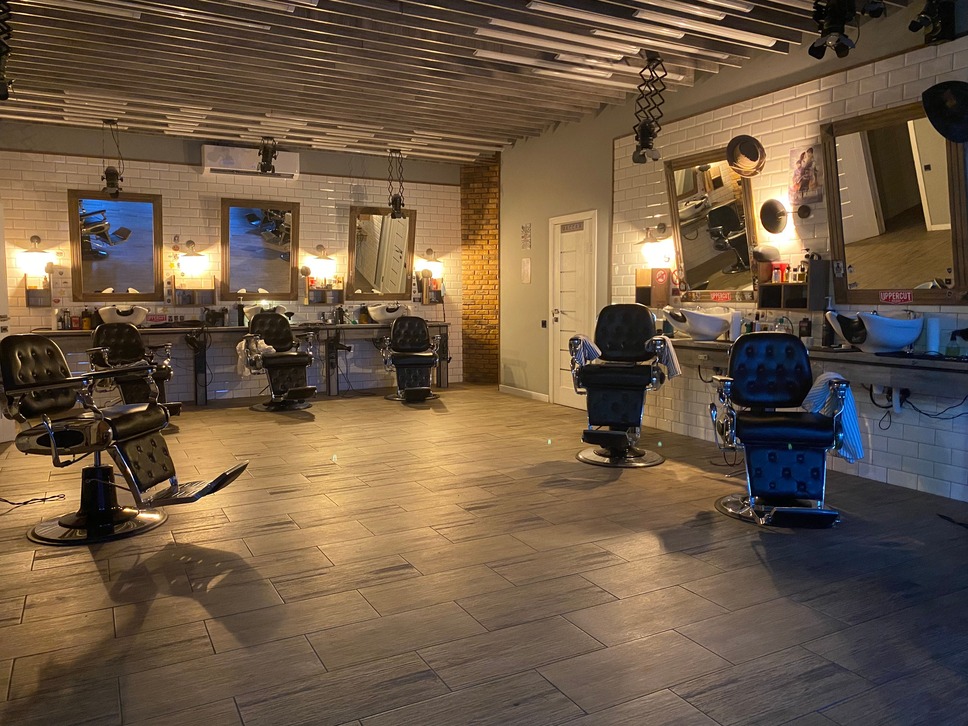
Once you've explored a few directions, pick the concept that excites you most. It doesn't need to be perfect, just practical, and something you can actually build a business around.
Whether that's a classic neighborhood shop, a booth-rental suite, or a premium grooming lounge, knowing exactly who you serve matters far more than getting everything right on day one.
Next up, let's find out if running a barber shop actually fits your strengths, and the kind of life you want to live.
🤔 Is Starting a Barber Shop Right for You? Skills, Hours, and the Barber Shop Business License
Not every business survives a rough economy, but barber shops usually do. People cut a lot of things from their budget before they give up their haircut. That's the upside of this business, steady money, a loyal group of regulars, and a shop that tends to hold steady no matter what's happening outside.
But there's a flip side too. You'll need a barber shop business license to legally operate, long hours on your feet, and the discipline to juggle rent, staff, and keeping clients happy, often all at once. So before diving in, it's worth figuring out if this is really the right fit for you.
Here's a quick way to check. If most of these sound like you, you're probably headed in the right direction.
Being honest with yourself now beats finding out the hard way later. Still excited after reading through that list? Good sign. That means it's time to figure out exactly what you'll offer, and who you'll build it for.
🛍 Barber Shop Services to Offer: Define What Your Shop Sells
Before your shop can grow, you need to know exactly what you're offering, and who you're offering it to. This is where you figure out which barber shop services will actually make up your business.
🎯 Your Audience
Let's look at the kinds of people who might end up sitting in your chair.
Two-Week Regulars: Guys who get haircuts on a set routine, usually every couple weeks. They stick with one barber because that barber already knows exactly what they want.
Young Professionals: Busy clients in their 20s and 30s who like booking online and want a sharp fade without wasting time waiting around.
Parents and Kids: Families searching for a barber who's good with children, at times that actually work around a busy weekend.
Premium Groomers: Clients after the full experience, hot towels, careful beard work, quality products, nothing rushed.
🛍 What You Might Sell
Picture your menu as a few layers stacked on top of each other, starting simple and getting more premium as you go.
Core Products, the everyday services most shops rely on:
Signature Elements, the details that make people choose you over the shop down the street:
Hot towel straight-razor shaves
The same barber, every visit, no exceptions
A schedule built around booked appointments, not just walk-ins
Add-ons & Upsells, the extras clients are often happy to pay more for:
Grooming packages and combos
Scalp and facial treatments
Special pricing for kids and seniors
Ancillary Opportunities, ways to earn beyond the chair itself:
Selling pomades, beard oils, and aftershave
Renting chairs out to independent barbers
Branded merchandise and gift cards
You can also build steady income through memberships, prepaid packages, and standing appointments. These keep cash flowing and lock in the two-to-four-week visit rhythm your shop depends on.
🔁 How You'll Deliver
Next, think about how your shop will actually make money. Will you be the one cutting hair? Will you have a team? Or will you rent out chairs to other barbers?
Owner-Operator Model: You're the main barber, cutting hair full-time, and your shop grows around your own reputation.
Commission Team Model: You hire barbers, and they split what they earn with you, while you handle running the shop.
Booth-Rental Model: Independent barbers pay you a fixed weekly rent to use your chairs, so your income stays steady no matter how busy they are.
A few simple tools can also make your day-to-day run a lot smoother.
Online booking that automatically reminds clients and rebooks their next visit
Contactless payment and tipping right at the chair
Notes on each client's haircut history, so any barber can pick up right where the last one left off
A system that tracks your retail products alongside your register
🧩 Summary
By now, you should have three simple answers in your head. Who are your clients? How often do they come back? And what makes getting a haircut at your shop feel easy and enjoyable? If you know those three things clearly, you're already ahead of most people starting a shop.
A helpful trick is to write your whole business down in one short sentence, like this: "We serve [who] with [what], because they value [why]."
Here's what that looks like in real life:
We serve two-week regulars with consistent same-barber cuts, because they value reliability and recognition.
We serve young professionals with bookable fades and fast checkout, because they value time and style.
We serve premium groomers with shaves and beard care, because they value the full ritual.
Once you fill in that sentence for your own shop, everything else gets easier. Your branding makes sense. Your service list writes itself. And every client who walks in feels like the shop was built just for them.
⚖ Pros and Cons of Starting a Barber Shop
Every business has a flip side, and this one's no exception. So before you fall in love with the idea of owning your own shop, let's look at it honestly, the wins and the trade-offs that come with it.
Pros
Clients keep coming back every few weeks, almost like clockwork, which makes your income surprisingly predictable.
Haircuts don't cost much to deliver, so a bigger share of what you charge stays in your pocket.
Rent out a few chairs, and that alone can cover your bills, no employees required.
Loyalty here compounds. A client who trusts you today might still be sitting in your chair a decade from now.
Once your first shop works, growing to more chairs or more locations is a path plenty of others have already proven out.
Cons
Rent and build-out costs start before the clients do.
Your income leans on skilled barbers, and skilled barbers can always walk out the door.
The hours are real. Evenings, weekends, standing most of the day.
Competition is everywhere, and a lot of clients are watching the price tag closely.
Getting licensed takes genuine time, effort, and tuition before you ever pick up a pair of clippers professionally.
Still feeling excited after all that? Good sign. That means it's time to talk about real numbers, what starting a barber shop actually costs, and what you could actually walk away with.
💰 Cost of Starting a Barber Shop: Startup Costs, Margins, and Revenue Potential
What's the real cost of starting a barber shop? It costs more than a mobile setup. But it costs less than a restaurant. Your success depends on a few things: Your lease, how full your chairs stay and how many clients come back.
Let's look at the numbers.
🧾 Startup Costs
How much you spend depends on how you start. Taking over a small space with a few chairs costs less. Building a premium lounge from scratch costs more. A standard shop usually costs $50,000 to $150,000 total. A very basic setup in a cheap space can cost under $10,000.
Your biggest costs come from three things. The lease deposit, usually $6,000 to $20,000. Renovation, usually $8,000 to $30,000. And how premium your chairs and finishes are.
📊 Cost Breakdown
The breakdown below reflects a representative independent shop with four to six chairs in a modest space. A premium lounge build runs well above these lines.
Category | Range | Notes |
Lease Deposit & First Months | $6,000 – $12,000 | Security deposit plus initial rent on the space |
Renovation & Build-out | $8,000 – $16,000 | Plumbing, mirrors, flooring, lighting, and waiting area |
Barber Chairs & Stations | $3,000 – $6,000 | Four to six chairs with stations and styling mirrors |
Tools & Equipment | $2,000 – $4,000 | Clippers, shears, razors, sterilizers, and backbar |
Initial Product Inventory | $2,000 – $4,000 | Retail products, capes, and sanitation supplies |
Licenses, Permits & Insurance | $1,000 – $2,000 | Business license, shop permits, and liability coverage |
Working Capital & Launch Marketing | $8,000 – $16,000 | Two to three months of costs plus opening promotion |
📈 Revenue & Margins
Now for the numbers everyone wants to know. A typical shop brings in $100,000 to $200,000 a year. That ranges from about $2,000 a month for a small, basic shop in a small town, up to $20,000 a month for a high-end shop in a big city.
What about profit? Gross margins on services usually run 50 to 70%. But after rent, wages, and other costs, net profit typically lands between 8 and 25%. One thing moves this number more than anything else: whether you pay barbers commission, or rent them chairs instead.
And when do you break even? Once your monthly revenue covers your fixed costs, usually $4,000 to $12,000 a month. At average prices of $25 to $50 a cut, that means roughly 200 to 400 client visits a month. Most shops reach that within 6 to 18 months, as their chairs fill up.
🔁 Ways to Improve Profit
Protect your regulars; thriving shops keep 60 to 70% repeat clients.
Rebook every client before they leave the chair, to lock in the visit cycle.
Sell retail products like pomades, beard oils, and aftershave, which carry strong margins.
Add premium services like hot towel shaves and grooming packages.
Rent out empty chairs to independent barbers for steady weekly income.
Cut down on no-shows with online booking, reminders, and card-on-file fees.
🧩 Summary
Every shop finds its own way forward. But one thing stays true for all of them. Know your costs. Know your income potential. Know your profit goals. This always matters.
Focus on what clients really want. A consistent cut. A barber who knows them. A shop that feels good to sit in. Get that right, and you're not just staying busy. You're building something that lasts.
🗺 How to Start a Barber Shop Business: Step-by-Step Guide
Every great shop started the exact same way, as a plan on paper before it was ever a place people walked into. Here's your real roadmap for how to start a barber shop business, laid out one step at a time.
Get Licensed & Experienced: Complete barber school and pass your state exam first. Then spend time working behind someone else's chair. This is where you build speed and start earning your own regulars.
Choose Your Concept & Location: Decide what kind of shop you want to run. Then find a location where foot traffic, parking, and rent actually work together for your budget.
Build Your Business Plan: Use the PrometAI Business Plan Generator to lay out your vision and your numbers clearly.
Secure Funding & Sign the Lease: Pull together your savings, or look into an SBA loan. Then negotiate a lease that your future revenue can realistically support.
Build Out & Equip: Finish the renovation. Bring in your chairs and stations. Set up your booking system, payments, and retail area.
Recruit Your Barbers: Bring on barbers who work for commission, or invite booth renters who already have loyal clients ready to follow them.
Launch & Promote: Open your doors with a strong social media push, a founding offer, and incentives that reward regulars for referrals.
Track and Improve: Watch your chair usage, rebooking rate, and retail sales closely, every single month. Adjust your prices, keep your regulars happy, and only expand once demand proves it's steady.
Not sure where to start writing all this down? You don't have to start from a blank page. Try the Business Plan Generator and put your own plan together in just a few minutes.