Some of the most convincing work isn’t always real. In a world where technology can recreate voices, images, and even experiences, the line between done and generated is starting to fade. That shift is raising an important question, especially in education.
6 min
AI and Authentic Assessment: Why Fieldwork Can Be Faked
15 September 2026
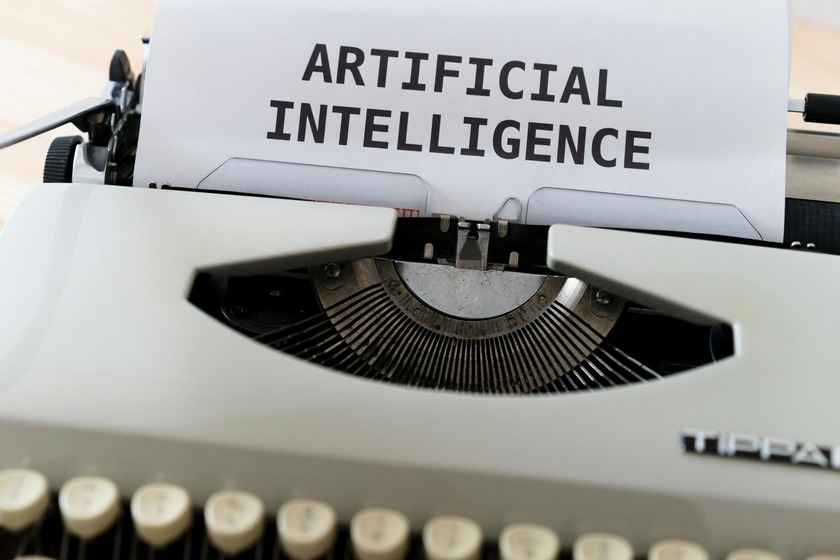
)
If something looks authentic, sounds thoughtful, and feels real does it always mean it actually happened? Let’s take a closer look.
Introduction: Homework Has Passed the Turing Test
For a long time, one belief felt unbreakable. Real work could not be faked.
Think about it:
A live interview needed real people.
A field study required you to actually be there.
A focus group meant conversations that truly happened.
That sense of certainty is starting to fade.
Today, within AI and education, something has changed. Tools powered by generative AI education do not just help with writing. They can create entire situations that feel real. A full interview transcript. A detailed field report. Even reflections that sound personal and thoughtful.
Pause for a second and ask yourself: If something looks real, sounds real, and reads perfectly, how do you prove it actually happened?
What makes this even more complex is how fast institutions reacted. To protect AI assessment, many universities moved away from essays and focused on what they believed was safer.
Fieldwork and real world observation
Primary data collection
Experiential and hands on learning
This shift toward authentic assessment AI was meant to create something AI could not touch.
But here is the uncomfortable truth. It can be faked.
A student can now generate a full focus group transcript faster than sending invitations to real participants. A field report can be written without ever visiting a location. The effort once required has been replaced by the ability to simulate.
This is not a small change. It is happening at scale.
89% of students reported using AI tools for coursework in 2024, according to Stanford Human-Centered AI Institute
72% of academic integrity officers say detecting AI generated fieldwork is very difficult or even impossible, based on International Center for Academic Integrity
Now think about what that means. A growing number of students are not just completing tasks. They are learning how to recreate reality on paper. Skills shift from experiencing to simulating.
So where does that leave authentic assessment?
To understand this shift, we need to break it down step by step. The next sections will explore where things started to slip, how synthetic data is changing the game, why verification is becoming harder, and what needs to change moving forward.
The Flight to Authenticity: The Institutional Blind Spot
A major shift is happening quietly. Education is moving closer to the real world, trusting experience as the safest way to measure learning.
A. Why Institutions Moved to Fieldwork and the Flaw in the Logic
As AI reshaped AI and education, universities had to rethink AI assessment. Essays became easier to generate, so the focus moved toward authentic assessment AI built on fieldwork and real-world tasks.
The idea felt simple and strong. AI can write, but it cannot step outside and experience reality.
This belief was reinforced by Northeastern University, which placed experiential learning at the center of protecting AI academic integrity.
At first glance, the logic seems clear:
Real interaction creates real data
Physical effort ensures genuine work
Time and coordination act as natural filters
Now pause for a second. What happens when that effort disappears?
AI removes the friction completely. Interviews, transcripts, and field reports can now be generated in minutes. The process still looks real, but the experience behind it may not exist.
There is also a simple reality to consider. Many students see fieldwork as something to complete, not something to explore. Once the effort is gone, the motivation to engage with the real world fades just as quickly.
B. The Real-World Anchor: What Happens When Synthetic Beats Physical
This is not just an academic issue. The same pattern has already played out in the real world.
Zillow built its strategy around data through its pricing system, the Zestimate. On paper, it looked precise and scalable.
But something important was missing.
No physical walkthroughs
No sensory details like noise, smell, or structure
No human judgment in real environments
These small details matter more than they seem. The result was costly. Zillow mispriced homes, leading to a $527 million write-down and cutting about 25% of its workforce, as reported in its Q4 2021 earnings and by The Wall Street Journal.
Now bring that idea back to education. When fieldwork is replaced with AI-generated content, the outcome looks polished and complete. But it is built on something that was never actually experienced.
At first, the difference is hard to notice. Over time, it grows. Decisions start relying on assumptions. Analysis loses depth. Confidence builds without real understanding.
And that is where the real problem begins.
Simulated Reality: The Era of Synthetic Fieldwork
Something subtle but powerful is changing the way research is produced. What once required time, coordination, and real interaction can now be created in minutes, often with results that look just as convincing.
A. How Synthetic Fieldwork Is Produced
Students and junior analysts are quickly realizing one thing. Asking AI to simulate a focus group is far easier than organizing a real one. No scheduling. No coordination. No waiting.
The result is surprisingly convincing.
AI can generate interview transcripts that feel natural and detailed. Conversations include pauses, slang, mixed opinions, and even small inconsistencies that make them feel human. At a structural level, these outputs are very difficult to distinguish from real fieldwork.
What makes this even more effective is how users guide the process.
Prompts can request small errors, awkward phrasing, or missing data.
Minor contradictions can be added to create realism.
Limitations can be introduced to mimic real research constraints.
This approach is often called the “flawed prompt” strategy. Instead of aiming for perfection, it intentionally builds imperfection into the output so it feels authentic.
Synthetic fieldwork today can replicate a wide range of research outputs:
Interview transcripts and focus group discussions
Consumer sentiment surveys and feedback summaries
Market observations and pricing insights
Supply chain and operational reports
Now pause and think about what is missing. Real fieldwork is not just about answers. It is shaped by unpredictable moments.
A location that is different from expectations. A participant who changes their opinion halfway through. A detail that was never planned but changes the entire direction of the analysis.
These are not easy to generate because they are not structured. They happen in real environments, through real interaction.
This is where the concept of embrained knowledge becomes important. Research from the University of Bath highlights that this type of knowledge comes from direct human experience. It reflects judgment, intuition, and the ability to respond to unexpected situations. According to Professor Dirk Lindebaum’s study, synthetic data removes this layer, limiting how individuals develop real analytical thinking.
In simple terms, you can generate answers. You cannot generate experience.
B. The 3-Minute Reality Audit
Are You Reading Synthetic Data Right Now?
Before trusting a field report, take a moment to look closer. A quick check can reveal more than it seems.
Do the findings align perfectly with the original idea, without any contradictions?
Do the interviews feel too clean, with no confusion, side comments, or unexpected responses?
Was the data collected quickly, without any mention of delays, challenges, or effort?
If two or more of these feel true, there is a strong chance the data may not come from real fieldwork.
A careful reader does not just look at what is written. They look at how it was created.
The Verification Collapse: Why We Cannot Catch Them
Everything still looks like it works. Reports get submitted, reviewed, and graded. Decisions get made. On the surface, nothing seems broken. But look closer, and a different picture starts to form.
A. The Research: Educators Cannot Reliably Detect AI Fieldwork
For a long time, AI academic integrity depended on a simple idea. A human reviewer could tell what is real and what is not. That idea is now under pressure.
Research by Kofinas et al. shows that within AI assessment and authentic assessment AI, students can generate project work, reflections, and case studies that are so fluent and natural that educators cannot reliably detect AI involvement. The issue is not about effort anymore. It is about visibility.
Detection starts to fail in very specific ways:
The flawed prompt strategy allows users to add small mistakes and inconsistencies, making synthetic work feel human.
AI detection tools create a false positive trap, where real work can be incorrectly flagged, damaging trust.
Verification cannot scale, since checking every interview, location, or participant is simply not realistic.
Now consider the impact of detection tools themselves.
Studies from Stanford Human-Centered AI Institute show false positive rates reaching up to 40% on genuine student writing. At the same time, findings shared through ResearchGate highlight how difficult it has become to confidently separate real work from AI-assisted outputs.
This creates a situation where neither trust nor verification feels fully reliable.
B. The AI Impact Assessment Problem in Organizations
This challenge does not stop at universities. It is already shaping how decisions are made inside organizations.
Teams rely on structured reports for AI impact assessment, business assessment AI, and AI governance assessment. These reports often look detailed, logical, and complete. The question is not how they look. It is what they are built on.
Data used in reports may be synthetic, yet appear completely valid.
Governance frameworks focus on AI usage, not on verifying the authenticity of input data.
Analysts may unknowingly base conclusions on information that was never observed in reality.
This creates a deeper risk that is easy to miss. When both the data and the analysis are generated, the final output still feels professional. It reads well. It sounds convincing. But it may not reflect the real world at all.
At that point, the challenge is no longer about catching errors. It becomes about understanding whether the foundation itself can still be trusted.
The Paradigm Shift: Legalize the Data, Test the Logic
Everything up to this point leads to one clear shift. The focus can no longer stay on how the work was done. It has to move toward how the thinking holds up.
A. From Proof of Work to Proof of Logic
For years, AI assessment and authentic assessment AI focused on proof of work. Did you collect the data? Did you complete the fieldwork? That approach is losing its strength. The new focus is much simpler and much stronger. Can you defend your thinking when things change?
This is where the shift happens:
From collecting data → to explaining decisions
From showing effort → to proving understanding
From submitting work → to defending logic
A useful way to think about this is the idea of architectural commitment.
Before any data is collected or generated, the student or analyst locks in their core idea. What is the main hypothesis? What is the structure behind the thinking?
This changes everything. The evaluation is no longer about the dataset, which can be generated. It is about logic, which must be built and explained by a human.
AI can generate a perfect interview. It cannot stand in your place and defend why that interview matters when the situation changes. That ability comes from real thinking.
B. The Modular Seminar: The Stress-Test Model
Now imagine a different kind of evaluation.
Instead of submitting a report and waiting for feedback, the real test happens live.
A sudden change is introduced. A key part of the data is removed. The situation shifts without warning. What happens next reveals everything.
The Manager’s Stress-Test Challenge
“Remove the urban segment from your dataset. Now explain how your pricing strategy changes.”
Watch the response.
If the logic was built by the person, they adjust. They rethink. They respond in real time.
If the work was generated, they struggle to move forward.
This idea can be applied through a few simple methods:
Lock in core ideas early so the structure exists before any data
Introduce live changes during evaluation and observe how thinking adapts
Focus on how well the logic is defended, not just what was presented
Here is why this works.
It does not matter whether the data is real or synthetic. What matters is whether the person understands the structure behind it. And that creates something important.
A system that tests thinking in real time becomes naturally resistant to AI. Not because AI disappears, but because it cannot replace the ability to respond, adapt, and explain under pressure.
That is where real understanding shows up!
Conclusion: Stop Auditing Data. Start Testing Minds.
For a long time, people believed fieldwork was safe. It felt real, and it felt impossible to fake. That belief shaped how AI assessment and AI academic integrity worked.
That belief is now breaking. Universities moved toward authentic assessment AI to stay ahead. They focused on real-world tasks, thinking this would protect learning in the age of AI and education. But things did not go as planned.
Here is what really happened:
Fieldwork was treated as a safe option, but AI learned how to copy the experience
Students and analysts started creating data that looks real, even when it is not
Checking the work became harder, and detection tools created new problems
Trust in data stopped being enough to prove real understanding
The problem is not just about fake data. The real problem is relying on data as the main way to judge learning.
A better approach is simple. Focus on how people think.
When something changes, can they explain their decisions?
Can they adjust their ideas?
Can they defend their logic?
That is where real learning shows up. The future will not reward those who produce the most polished reports. It will reward those who can think clearly and respond when things change.
This is also why tools like PrometAI matter. It helps people build strong thinking and clear structure, not just good-looking content.
The difference becomes clear very quickly. When the situation shifts, one person adapts and explains with confidence. The other struggles to respond. That moment shows who truly understands their work.
FAQs
Related articles
)
How to Start a Jewelry Business
)
SBA Loan Denied? What To Do Next and How to Appeal It
)
SBA Loan Business Plan Guide: What Lenders Actually Want
)
Business Intelligence Tools: How to Choose the Right Platform
)
I Want to Start a Business But Have No Ideas: 3 Ways to Find One
)
Lean Business Plan Guide: The Monthly Review Cycle Explained
)
How to Start a Dental Practice
)
Can ChatGPT or Claude Write a Business Plan? Honest 2026 Test
)
Grammarly Business Plan Generator: What It Really Makes (2026)
)