IT Consulting Business Plan Template

An IT consulting business plan template is not just a document. It shows if your business can actually work. Investors look at it to understand if you can sell your expertise, win clients, and stay profitable without taking on too much risk.

In IT consulting, being clear is everything. A vague plan raises doubts quickly. A strong plan clearly shows what you offer, how you deliver your services, how you build the right team, and how you turn projects into steady, long-term revenue.

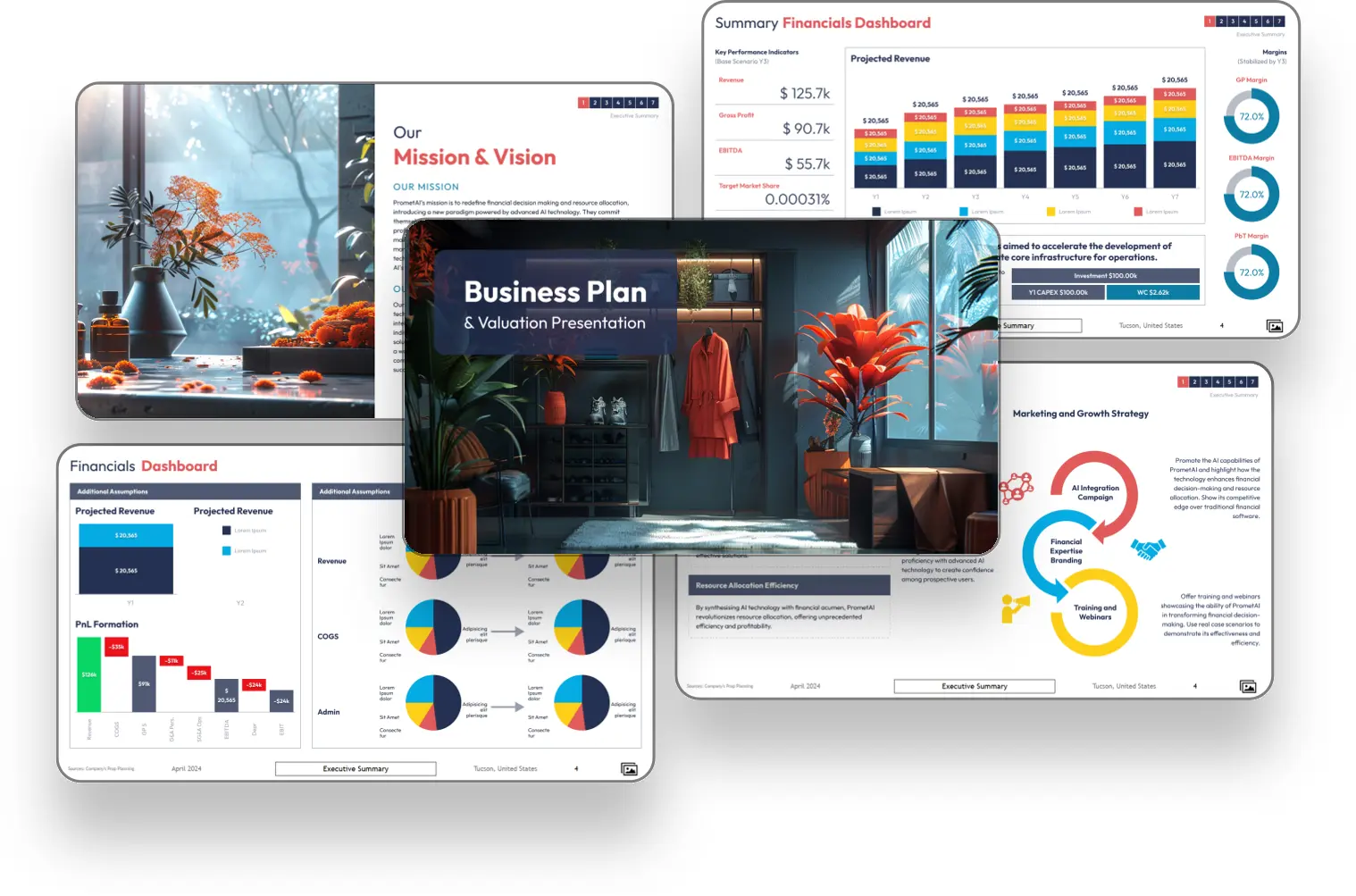
What You Get with our IT Consulting Business Plan Template

Executive summary

Executive summary

Market analysis

Market analysis

Revenue model

Revenue model

Cost Structure

Cost Structure

Financial projections

Financial projections

Funding strategy

Funding strategy

Risk analysis

Risk analysis

Production planning

Production planning

What Makes a Strong
IT Consulting Business Plan

Investors look for one simple thing. Can your expertise turn into steady, repeatable revenue? A strong plan answers that clearly. It shows why clients choose you, why they continue working with you, and how your business keeps running smoothly as demand grows.

In an it consulting business plan template, the signs of a strong plan are easy to spot. There is a clear niche, a defined target client, and a service structure that starts with projects and grows into ongoing support or managed services. Everything connects, from how you get clients to how you deliver work, price services, and keep customers long term.

A weak business plan for it consulting company often fails because it tries to target everyone. Saying you serve “any company needing digital transformation” creates confusion. A strong it consulting startup business plan focuses on specific services like cloud migration, cybersecurity, data architecture, or ERP integration, where real demand and budgets exist.

A solid it consulting firm business plan also explains how the team will scale. Growth depends on people, which brings challenges like pricing work correctly, managing workloads, planning hiring, and maintaining quality. A good it consulting business plan sample shows how the team handles pressure, works with subcontractors, and protects profit margins beyond the founder’s own work.

A solid sample business plan for it consulting firm also shows real business thinking. Revenue is clearly split between one-time projects and ongoing services. Sales timelines are realistic, and growth comes from building stronger relationships with existing clients. This is what makes a business look stable, scalable, and ready for investment.
IT Consulting Business Plan Template

Financial Considerations of an
IT Consulting Business Plan

Managing money in IT consulting may look easy, but it gets challenging as the business grows. Costs are not tied to equipment, but to people, timing, and delivery. A strong plan clearly shows where pressure can build and how the business handles it.

Utilization Rate

Utilization Rate

This shows how much of your team’s time is spent on paid work. A good plan explains how busy junior and senior team members will be, how long it takes for new hires to become productive, and how unpaid tasks affect overall profit.

Compliance and Tooling Costs

Compliance and Tooling Costs

Running an IT consulting business comes with extra costs. These include certifications, security tools, cloud systems, and delivery software. A strong plan includes these clearly, since clients expect high-quality, professional service.

Customer Acquisition Payback

Customer Acquisition Payback

Winning clients in IT consulting can take time. A strong plan connects marketing and sales costs to realistic timelines and deal sizes, showing how long it takes to recover those costs.

Recurring Revenue Mix

Recurring Revenue Mix

Project work brings in revenue, but it can be unpredictable. Ongoing support creates stability. The plan should show how managed services, retainers, or maintenance contracts help bring in steady income and make revenue more reliable over time.

Bench Cost Exposure

Bench Cost Exposure

When there are not enough projects, consultants may sit idle. Even then, salaries still need to be paid. A strong plan shows the cost of having underused team members, not just the ideal situation where everyone is fully booked.

Common Mistakes in the
IT Consulting Business Plan

01

Too Broad a Positioning

“End-to-end IT consulting” sounds good, but it is too general. A strong plan focuses on one clear service.

05

No Transition to Recurring Revenue

One-time projects bring income, but they are not stable. A strong plan shows how projects turn into ongoing work.

04

Unrealistic Cash Flow Timing

Salaries must be paid on time, but client payments can be slow. A good plan prepares for this gap.

03

Weak Margin Logic

More revenue does not always mean more profit. Pricing, team workload, and roles all affect how much money the business keeps.

02

Founder-Dependent Delivery

If everything depends on the founder, the business cannot grow. The team should be able to handle projects on its own.

Why use PrometAI
for Your IT Consulting Business Plan

PrometAI helps you treat your business plan like a real working model, not just a document. This is especially important in IT consulting, where small mistakes in utilization, hiring pace, or contract timing can affect the entire business.

The value is not about “AI magic.” It comes from clear and structured financial logic. PrometAI helps you plan delivery capacity, understand your revenue mix, and manage cash flow pressure more realistically. It also allows you to test different scenarios, including downside risks, so you are better prepared for challenges. On top of that, it supports business valuation and stress testing, helping founders and investors make informed decisions before committing capital.

Why use PrometAI

Example Structure For IT Consulting Business Plan

This section shows how the IT Consulting Business Plan is built step by step.

Sections

1. Executive Overview

9. Scenario Analysis

8. Risk Management

7. Financial Overview

6. Operations

5. Competitive Analysis

4. Growth Strategy

3. Market Opportunity

2. Company Overview

Read More

FAQs