Let's take a closer look at what's happening behind the scenes and why AI tool pricing is changing.
Stage 1: The Price Is Rising While the Cost Is Falling
AI tool pricing has become one of the biggest surprises of 2026. While AI subscriptions are getting more expensive, the technology behind them is actually becoming much cheaper.
That might sound hard to believe, but the numbers tell the story. According to Stanford's 2025 AI Index, the cost of running AI models with GPT 3.5 level performance dropped from $20.00 to just $0.07 per million tokens between November 2022 and October 2024. That is a drop of more than 280 times. Yet many users are paying higher AI subscription costs than ever before.
So, where did all those savings go?
For many AI companies, lower operating costs did not lead to lower prices. Instead, they created an opportunity to improve profit margins while continuing to raise subscription fees. In other words, the cost of AI went down, but the AI price that customers see each month often moved in the opposite direction.
This matters even more if you run a business. Many founders still treat AI subscriptions as a fixed monthly expense, much like office rent or a software license. That assumption is becoming risky.
Today's AI tools behave much more like a utility service. Pricing can change, new usage limits can appear, premium features can move behind higher plans, and additional costs can grow as your business relies more on AI. Understanding this shift is the first step toward making smarter budgeting decisions and avoiding unexpected increases in the future.
Stage 2: The Software Inflation Tax
By now, one thing is becoming clear. Rising AI subscription costs are not just about better technology or smarter AI. They are part of a much bigger shift happening across the software industry.
The numbers make that easy to see. According to Vertice, a platform that tracks more than $30 billion in software spending, SaaS prices increased by 13.2% year over year as of March 2026. That is nearly two percentage points higher than the previous year and remains in double digits, even though overall consumer inflation has slowed. During the first months of 2026, software price increases stayed between 12.2% and 14.5%, showing that this is an ongoing trend rather than a one time jump.
Even more interesting, this trend did not begin in 2026. Back in 2023, CFO Dive reported that software prices were already rising much faster than general inflation. At that time, software inflation reached 8.7%, which was more than double the Consumer Price Index, and 73% of SaaS vendors had already increased their prices. In other words, today's SaaS pricing trends 2026 are simply the next chapter in a story that has been unfolding for years.
So, what is actually changing?
According to Zylo's 2026 SaaS pricing analysis, software companies are following three main strategies. They are raising subscription prices, redesigning pricing tiers, and expanding usage based charges. The first two are easy to spot. The third is where many businesses get caught off guard because costs no longer stay fixed. Instead, they grow as usage grows.
That is also changing the way AI pricing software works. According to High Alpha's 2025 SaaS Benchmarks Report, 53% of companies that monetize AI still rely on subscriptions alone. The rest have already started using other models, including hybrid pricing (31%), usage based pricing (11%), and outcome based pricing (5%). The subscription is not disappearing. It is simply gaining a meter that keeps running as your team uses the product.
Look at your three largest AI tool invoices. For each, can you forecast next quarter's bill to within 10% without calling the vendor? Every line where the answer is no has already moved from subscription to consumption, whether or not your contract says so.
Understanding this shift is becoming essential because pricing artificial intelligence is no longer based on a single monthly fee. The more businesses rely on AI, the more important it becomes to understand how those costs are really calculated.
Stage 3: How the Increase Actually Reaches You
Most AI subscription price increase announcements do not arrive with a message saying, "We're raising your price." Instead, they happen through small changes that are easy to overlook.
A new pricing tier appears. Usage limits change. Credits replace simple pricing. Everything seems familiar at first, but your monthly bill gradually becomes harder to predict.
Let's look at the four strategies that make this possible.
The Tier Ratchet (Priced Upward by Design)
One of the easiest ways to increase an AI software price is to create a more expensive plan and place the most valuable features behind it.
At first glance, nothing seems to change. The plan you already have stays the same, so there is no obvious price increase. The catch is that the features your team eventually needs are only available on the next tier. Upgrading starts to feel like the only practical option.
This approach works because the higher plan feels like a choice, even when it slowly becomes a necessity. For many businesses, that leads to gradual budget growth as more team members move to premium plans without a single renewal drawing attention to the higher spending.
Pricing Ladder Table
Vendor | Entry Tier | Top Tier | What the Top Tier Actually Buys |
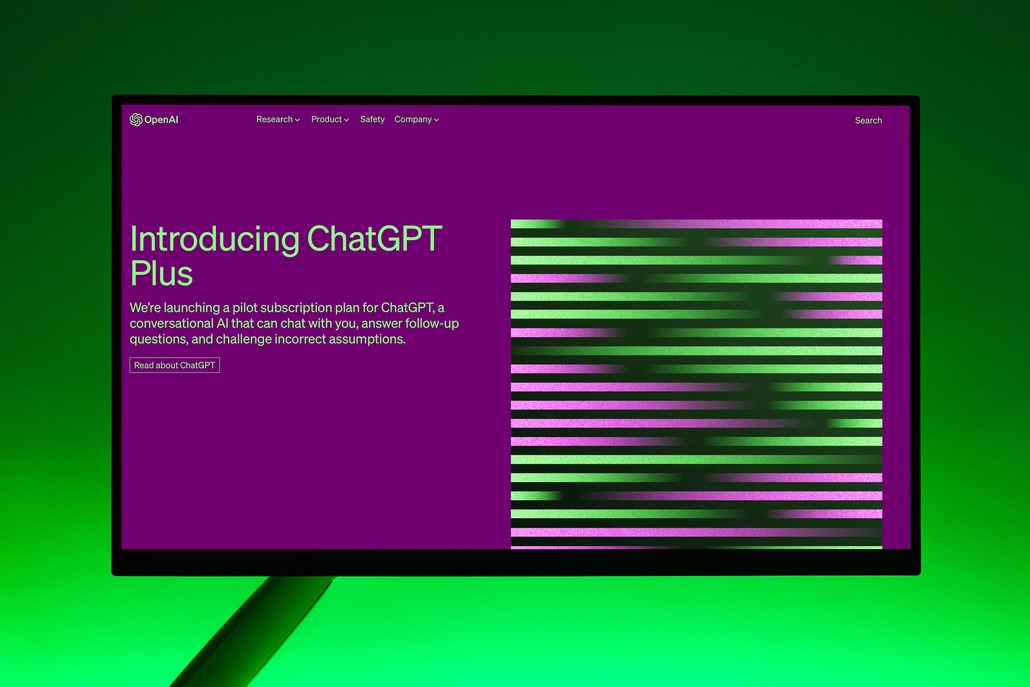
OpenAI | ChatGPT Plus: $20/mo | ChatGPT Pro: $200/mo (launched Dec 5, 2024) | 'Scaled access to the best of OpenAI's models and tools,' including unlimited access to o1 |
Anthropic | Claude Pro: $20/mo | Claude Max: $100/mo (5x) or $200/mo (20x) | 5x or 20x more usage per session than Pro, not unlimited use: weekly and monthly caps still apply |
The Seat to Meter Switch (Usage Replaces Headcount)
Traditional subscriptions are easy to understand. If your team has ten people, you pay for ten seats.
Usage-based AI pricing works very differently. Instead of paying only for people, you also pay for how much those people use the service. That makes future AI subscription costs much harder to predict.
Even premium plans work this way behind the scenes. Anthropic explains that Claude Max pricing does not provide unlimited access. The $100 and $200 plans simply allow 5x or 20x more usage than Claude Pro, while weekly and monthly limits still apply. In other words, even the highest plans still have a meter running in the background.
That creates another challenge for founders. As Zylo points out, extra usage charges can build up between billing cycles. By the time the invoice arrives, the additional cost has already been added.
The Token Passthrough Illusion (You Do Not Get the Deflation)
Here's another surprising fact. The cost of running AI has fallen dramatically. Stanford's research showed that the cost of AI at GPT 3.5 quality dropped by more than 280 times in just two years.
So why has the AI subscription price increase continued? Because those savings usually stay with the vendor instead of reaching the customer. Companies set prices based on what customers are willing to pay, not simply on what the technology costs.
Most users never notice this because subscriptions hide what happens behind the scenes. The monthly price stays front and center, while the falling operating costs remain invisible. That allows vendors to turn cheaper technology into higher profit margins instead of lower customer bills.
The Credit Curtain (Usage You Cannot Price)
Another growing trend is charging customers with credits or tokens instead of clear dollar amounts.
At first, this sounds simple. In reality, it can make usage-based AI pricing much harder to understand. A task that costs three credits today might require seven credits tomorrow after the provider updates its AI model. Your monthly price has not changed, but the value of each credit has.
This works because customers cannot easily see how credits translate into real money or completed work. The provider can adjust the underlying pricing without changing the headline subscription.
For founders, that creates a difficult situation. AI subscription costs become harder to forecast, compare, and explain because the business is paying with a pricing system that only the vendor fully controls.
Stage 4: The Bitter Pill: Where the Model Breaks
Higher prices are only part of the problem. The bigger challenge is knowing what your next AI bill will actually look like. Many businesses still treat AI subscription costs as a fixed monthly expense. That worked when software pricing rarely changed. Today's AI tools work differently.
Features move between plans. Usage rules change. AI models are replaced. New pricing systems appear. As a result, AI tool pricing is becoming much harder to predict, making it easier for costs to grow without warning.
Here are some of the biggest reasons why.
Failure Mode Table
Problem | Impact |
Opaque credit units | You cannot convert 'credits' into dollars or work, so the budget is unauditable |
Mid-contract repricing | AI features and meters change inside the term, not just at renewal |
Usage overages | Costs spike daily or weekly between billing cycles, with no renewal checkpoint to catch them |
Model deprecation | A retired model forces a move to a pricier tier to keep the same capability |
Agent-driven consumption | Autonomous agents burn tokens with no seat attached, detaching cost from headcount entirely |
Every issue on this list can increase your AI software cost. Two of them deserve a closer look because they are becoming some of the biggest reasons businesses lose control of their AI budgets.
Failure Mode: The Silent Reprice
Most businesses expect pricing changes to happen when a contract is renewed. That is no longer always the case. An AI provider can change a usage meter, retire a model, or move an important feature into a higher plan while your contract is still running.
The first sign is often a larger invoice, not a warning email. That makes budgeting much harder because the review process many finance teams rely on never has a chance to catch the change.
The best way to reduce this risk is to prepare before it happens. Ask vendors to include limits on mid contract price and usage meter changes directly in the contract, not only in the order form. It is also worth requesting advance notice before an important AI model is retired. A little notice can make a big difference when planning your budget.
Failure Mode: The Agent Runaway
AI agents introduce a completely different challenge.
Unlike employees, AI agents do not need their own software seat to keep working. They can continue running tasks, generating content, and using tokens around the clock. That means costs become linked to activity instead of the number of people on your team.
Baytech Consulting provides a hypothetical illustration, not observed market data, that explains why this matters. Imagine a company cuts its software seats by 50%, but the vendor raises prices by 15%. Even then, the vendor would still lose 42.5% of its revenue. That helps explain why many AI companies are expected to charge based on usage instead of offering unlimited flat rate plans.
The simplest way to stay in control is to monitor AI agent usage every day instead of waiting for the monthly invoice. It is also a good idea to treat every always on AI agent as its own variable cost center with a clear spending limit.
The Bitter Pill
The good news is that you can prepare for these changes. A few simple habits can help you stay in control, even as AI pricing becomes more complex.
Treat every AI expense as variable until proven otherwise.
Ask vendors to explain exactly how credits convert into dollars, and get that explanation in writing.
Review AI usage every week instead of waiting for contract renewals to spot unexpected cost increases.
Keep a backup AI model for every mission critical task so a retired model never forces you into a more expensive plan.
This is the same approach experienced founders use for any business expense that grows with usage instead of staying fixed over time.
Stage 5: The Orchestrator's Conclusion
The biggest takeaway is surprisingly simple: finding the cheapest AI tool is no longer the goal. Building an AI budget you can understand and control is what really matters.
That means thinking about AI differently. Instead of treating AI subscription costs like a fixed monthly bill, treat them like any other business expense that grows with usage. Monitor how much you use, negotiate clear limits whenever possible, and avoid depending on a single AI tool when other options are available.
There is one more lesson worth remembering. A lower cost of AI does not always lead to lower prices. As you've seen, the technology behind AI became more than 280 times cheaper, yet many subscriptions became more expensive. That is because AI tool pricing is driven by value, demand, and customer dependence, not just by the cost of running the technology.
The businesses that stay ahead are the ones that stay flexible. They build an AI stack with backup options, clear spending limits, and room to adapt when pricing changes.
In 2026, many AI subscriptions may look like a flat monthly fee, but behind the scenes they often behave like a usage meter. Plan for them as a variable cost, stay in control of your usage, and pricing changes are far less likely to catch you by surprise.
)
)
)
)
)
)
)
)
)
)
)